S
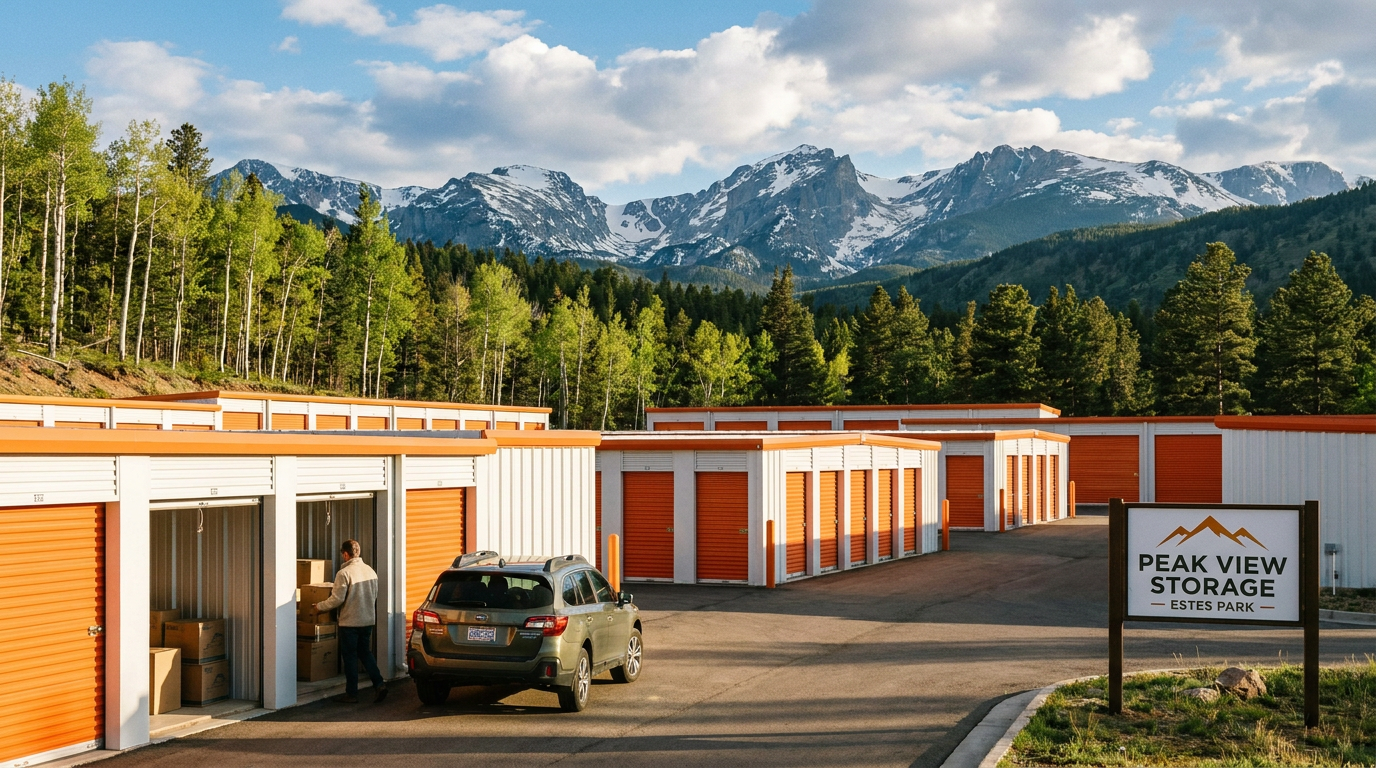
torage units in Estes Park, Colorado range from $119 per month for a 5x10 drive-up unit to $445 per month for a 10x25 space. Open parking starts at $135 monthly. Your final cost depends on unit size, access type, location within the facility, and seasonal demand patterns unique to this mountain community.
Current Storage Unit Prices in Estes Park
According to StorageCafe's 2026 market data, Estes Park storage prices exceed Colorado averages by a significant margin. The town's position as a gateway to Rocky Mountain National Park creates year-round demand from residents, seasonal workers, and outdoor enthusiasts storing recreational gear.
Local facilities like Estes Park Storage, Sky View Storage, and Alpine Self Storage compete for limited commercial space in the Estes Valley. This scarcity drives prices higher than comparable units in Loveland, Fort Collins, or Longmont, where land costs remain lower.
Larger units offer better value per square foot. A 10x25 drive-up unit costs $1.78 per square foot, while a 5x10 unit runs $2.38 per square foot. Renters storing substantial household contents save money by consolidating into one larger space rather than renting multiple smaller units.
Unit Size: The Primary Cost Factor
Unit dimensions determine 60-70% of your monthly storage cost. The Self Storage Association
reports that 10x10 units remain the most popular size nationally, accounting for 23% of all rentals. In Estes Park, this mid-size option balances capacity with affordability for most residential storage needs.
A 5x10 unit (50 square feet) holds approximately one bedroom's worth of furniture: a twin bed, dresser, small desk, and 10-15 boxes. This size works well for college students at nearby Colorado State University storing items over summer break, or seasonal workers at YMCA of the Rockies needing temporary space.
The 10x10 unit (100 square feet) accommodates a one-bedroom apartment's contents, including a sofa, dining set, mattress, and 20-30 boxes. Most Estes Park residents downsizing or between homes choose this size. At $249 monthly, it represents the local market's sweet spot for value and capacity.
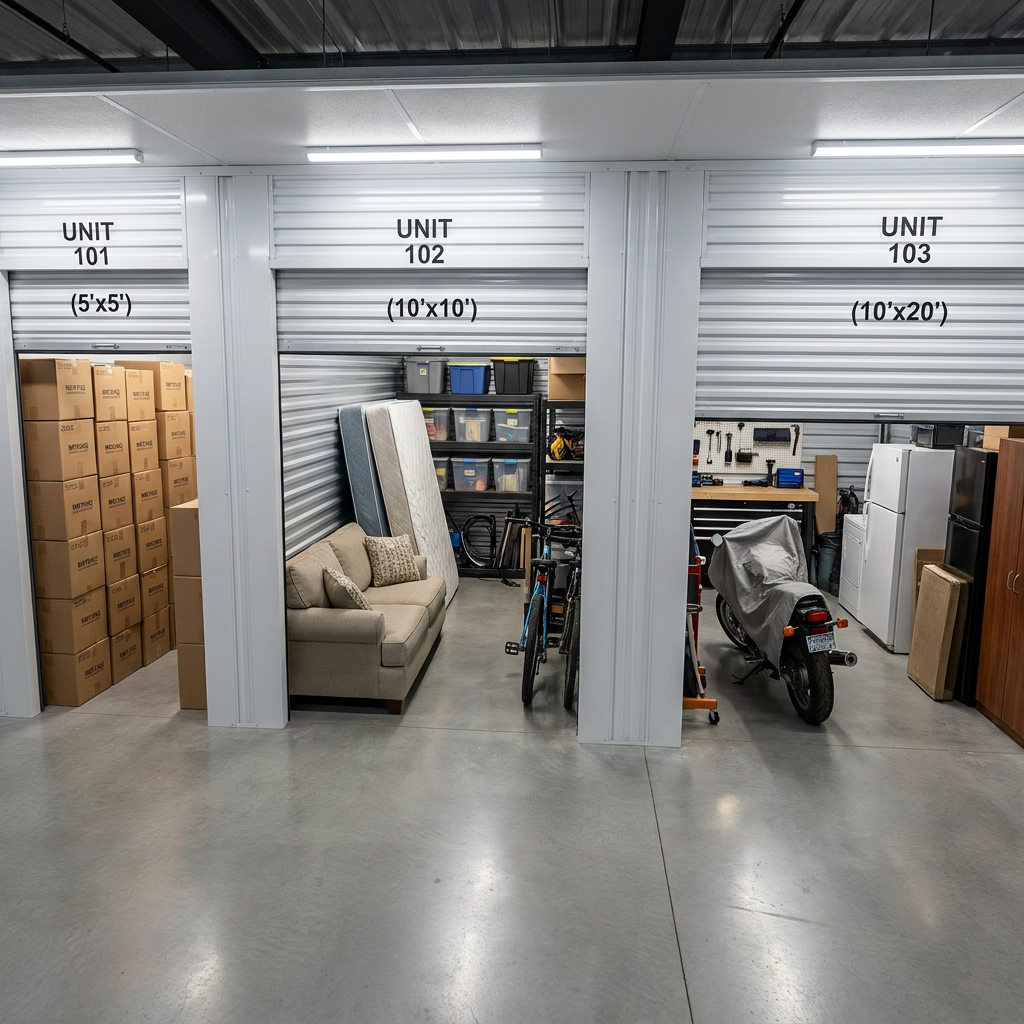
For full households, vehicles, or business inventory, 10x20 and 10x25 units provide 200-250 square feet of space. These larger options fit everything from a three-bedroom home, including appliances. The 10x20 drive-up at $375 monthly also accommodates standard vehicles, making it popular with second-home owners storing cars during off-seasons.
Access Type and Its Impact on Pricing
Drive-up units command premium pricing because they eliminate the need for elevators, hallways, and carts. You pull your vehicle directly to the unit door, reducing loading time by 40-60% compared to interior units. For Estes Park renters frequently accessing camping gear, ski equipment, or business supplies, this convenience justifies the higher cost.
According to SpareFoot's industry analysis, drive-up units typically cost 15-25% more than interior units of equivalent size. However, most Estes Park facilities offer primarily drive-up access due to the climate and customer preferences, making this the standard rather than a premium option locally.
Open parking spaces provide the most economical option for vehicle storage. A 10x20 open parking space at $135 monthly costs 64% less than an enclosed 10x20 drive-up unit. The trade-off involves weather exposure; Colorado's intense UV radiation, hail storms, and winter snow affect uncovered vehicles more significantly than enclosed ones.
Location Within Estes Park
Estes Park's geography constrains commercial development to specific corridors. Facilities on Woodstock Drive, near the intersection with Highway 36, offer convenient access from both the town center and the Stanley Hotel area. Properties closer to Lake Estes or the Big Thompson River corridor may charge premiums for scenic locations or proximity to recreational areas.
The 1210 Woodstock Drive location places Estes Park Storage
within a 5-minute drive of downtown, the Estes Park Visitor Center, and the Fall River entrance to Rocky Mountain National Park. This central positioning appeals to renters who need regular access without navigating tourist traffic on Elkhorn Avenue.
Facilities at higher elevations within the Estes Valley face additional operational costs. Snow removal, road maintenance, and heating expenses increase at 7,500 feet elevation. These costs factor into monthly rates, particularly for facilities offering enclosed or climate-controlled options.
Seasonal Demand Patterns
Estes Park experiences dramatic seasonal population swings. The town's 6,300 permanent residents swell to over 30,000 daily visitors during peak summer months, according to the Estes Park Economic Development Corporation. This tourism influx creates storage demand from seasonal businesses, vacation rental operators, and temporary workers.
Peak demand occurs from May through September when Rocky Mountain National Park records 80% of its 4.5 million annual visitors. Storage facilities often reach 95-100% occupancy during these months. Renters securing units in March or April may lock in lower rates before summer demand drives prices upward.
Winter months (November through March) typically see 10-20% lower occupancy rates. Some facilities offer promotional pricing during this period to maintain cash flow. However, Estes Park's growing reputation as a winter destination, with proximity to skiing at Eldora Mountain and snowshoeing in Rocky Mountain National Park, has compressed the traditional off-season discount window.
Security Features and Their Cost Impact
Security infrastructure directly affects storage pricing. Basic facilities with perimeter fencing and padlocks cost less than those with comprehensive security systems. The Move.org 2026 storage report
indicates that facilities with advanced security features charge 10-15% premiums over basic options.
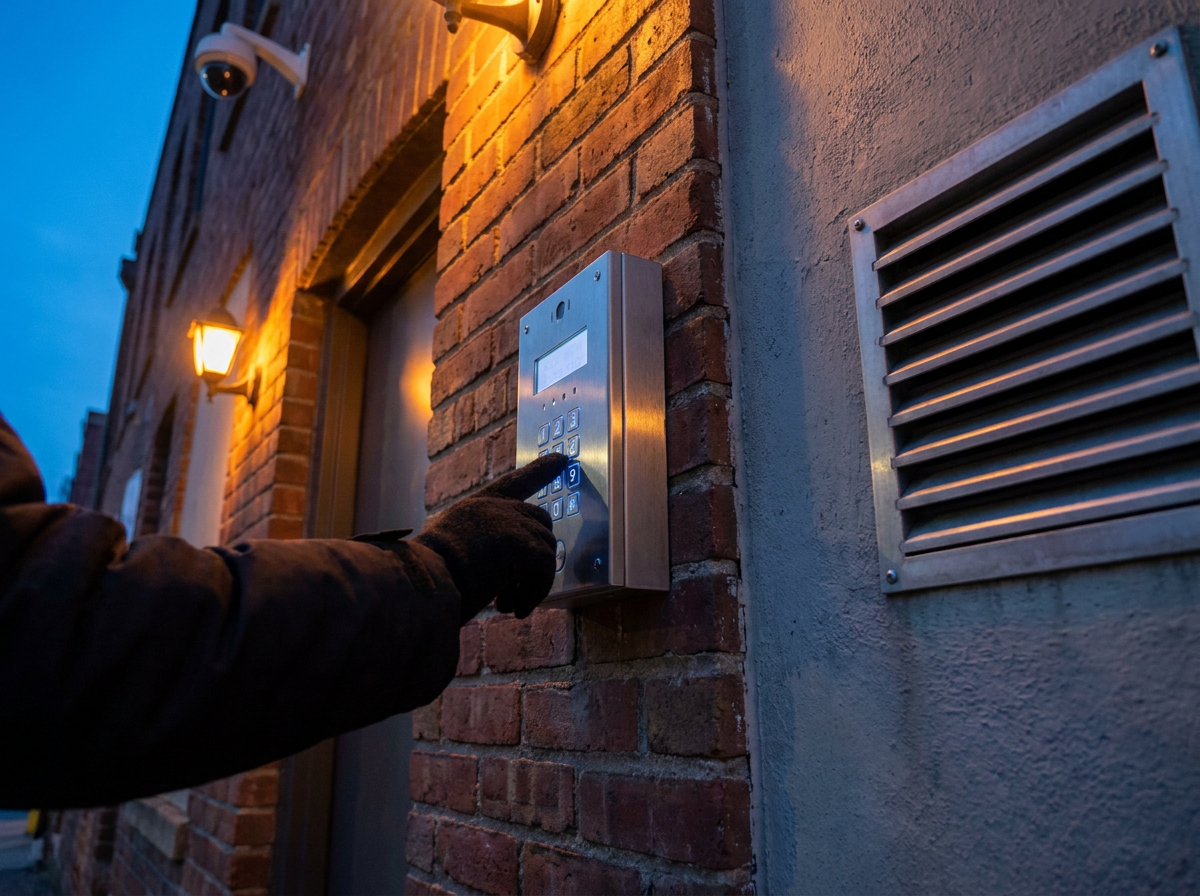
Full gating with individual access codes prevents unauthorized entry and creates audit trails of all facility access. LED lighting throughout the property deters theft and vandalism while improving safety during early morning or evening visits. Security cameras provide 24/7 monitoring and evidence collection if incidents occur.
These features matter particularly in Estes Park, where high tourist traffic increases the risk of opportunistic theft. Facilities investing in comprehensive security, like those with access control, LED lighting, and camera systems, justify higher rates through reduced loss claims and lower insurance costs passed to tenants.
Rental Terms: Month-to-Month vs. Long-Term
Most Estes Park storage facilities operate on month-to-month rental agreements, providing flexibility for the area's transient population. This arrangement suits seasonal workers, vacation property owners, and residents with uncertain timelines. However, month-to-month terms typically carry higher per-month rates than long-term commitments.
Some facilities offer 6-month or 12-month rate locks that reduce monthly costs by 5-10%. The trade-off involves commitment; breaking a long-term agreement early may trigger penalties or forfeiture of prepaid discounts. For renters certain of their storage duration, these arrangements provide predictable budgeting.
Promotional pricing offers another avenue for savings. Move-in specials like 2 months at 50% off reduce first-year costs significantly. On a $249 monthly 10x10 unit, this promotion saves $249 over the first year, equivalent to one free month of storage. Check the frequently asked questions
page for current promotional offers.
Deposit Requirements and Move-In Costs
Traditional storage facilities require security deposits equal to one month's rent, increasing initial move-in costs by 50-100%. A $249 monthly unit with a matching deposit requires $498 upfront before storing the first box. This barrier affects budget-conscious renters, particularly seasonal workers with limited cash reserves.
No-deposit facilities eliminate this upfront burden, allowing renters to begin storing immediately with only the first month's payment. This approach benefits renters with strong credit histories who present low default risk. Facilities absorb slightly higher risk in exchange for reduced move-in friction and faster occupancy rates.
Online rental and immediate move-in capabilities further reduce transaction costs. Digital lease signing, automated payment setup, and instant access code generation eliminate the need for in-person appointments. Renters arriving in Estes Park can secure a unit during the drive from Denver International Airport and access it upon arrival.
Tenant Protection Plans: Optional Cost Consideration
Standard renters insurance rarely covers belongings in storage facilities. Tenant protection plans
fill this gap, covering theft, fire, water damage, and other perils. SafeLease and similar providers offer coverage starting at $10-15 monthly for $2,000-3,000 in protection.
Higher coverage tiers cost $20-30 monthly for $5,000-10,000 protection limits. Renters storing valuable items like antiques, electronics, or business inventory should calculate replacement costs before selecting coverage levels. Underinsuring saves monthly premiums but creates financial exposure if losses occur.
Some facilities require minimum protection plan enrollment, adding $10-15 to the advertised monthly rate. Others make coverage optional, allowing renters to self-insure or use existing homeowners or renters policies with storage endorsements. Verify coverage requirements before comparing facility prices to ensure accurate cost comparisons.
How Estes Park Compares to Nearby Markets
Estes Park storage costs exceed surrounding communities due to land scarcity, higher operating costs, and strong demand. Understanding regional pricing helps renters evaluate whether storing locally or commuting to access cheaper facilities makes financial sense.
Storing in Loveland saves approximately $75-100 monthly compared to Estes Park. However, the 70-mile round trip for each access visit costs $15-25 in fuel and 90 minutes in driving time. Renters accessing units more than 3-4 times monthly typically find local storage more economical despite higher rates.
For infrequently accessed items like holiday decorations, archived documents, or seasonal furniture, Front Range facilities may offer better value. Items needing regular access, such as business inventory, recreational gear, or rotating seasonal wardrobes, justify Estes Park's premium for convenience.
Strategies to Reduce Your Storage Costs
Several approaches help minimize monthly storage expenses without sacrificing necessary space or security. Implementing these strategies can reduce annual storage costs by $200-500 depending on your situation.
Right-size your unit:
Use a storage unit size guide
to avoid renting more space than needed. A 10x10 unit costs $130 more monthly than a 5x10. If your belongings fit in the smaller space with proper organization, the annual savings reach $1,560.
Time your move-in strategically:
Renting during off-peak months (October through April) may yield promotional rates or negotiating leverage. Facilities with higher vacancy rates during winter months sometimes offer first-month-free or reduced-rate incentives.
Take advantage of promotions:
Move-in specials like 2 months at 50% off provide immediate savings. On a $375 monthly 10x20 unit, this promotion saves $375 over the promotional period. Ask about current offers when comparing facilities.
Consider open parking for vehicles:
If storing a car, boat, or RV, open parking at $135 monthly costs 64% less than enclosed drive-up storage. Invest savings in a quality vehicle cover for weather protection.
Consolidate with neighbors or family:
Sharing a larger unit splits costs. Two renters sharing a 10x20 at $375 pay $187.50 each, less than individual 5x10 units at $119 each while gaining more total space.
Frequently Asked Questions About Estes Park Storage Costs
Why is storage more expensive in Estes Park than other Colorado towns?
Limited developable land in the Estes Valley restricts supply while tourism and seasonal population create strong demand. Operating costs including snow removal, higher utility rates, and property taxes in Larimer County also contribute to elevated pricing. Facilities pass these costs to renters through higher monthly rates.
Do storage prices change during tourist season?
Most facilities maintain consistent published rates year-round but may reduce promotional offers during peak summer months when occupancy approaches 100%. Renters securing units before May often find better promotional terms than those renting during June through August peak demand.
Is a deposit required for storage units in Estes Park?
Requirements vary by facility. Some require deposits equal to one month's rent, while others operate on no-deposit models. Estes Park Storage offers month-to-month rentals with no deposit required, reducing move-in costs to just the first month's payment.
What is included in the monthly storage price?
Base monthly rates typically include unit access, basic security features, and facility maintenance. Tenant protection plans, locks, and moving supplies usually cost extra. Verify what each facility includes before comparing prices to ensure accurate cost analysis.
Can I negotiate storage prices in Estes Park?
Negotiation success depends on occupancy rates and timing. During lower-demand winter months, facilities may offer flexibility on rates or enhanced promotional terms. During peak summer season with near-full occupancy, negotiating leverage decreases significantly.
Making Your Storage Decision
Storage costs in Estes Park reflect the community's unique characteristics: limited land, strong tourism demand, and higher operating costs at elevation. Monthly rates ranging from $119 to $445 for enclosed units and $135 to $315 for open parking accommodate diverse storage needs and budgets.
The factors affecting your specific cost include unit size, access type, rental terms, and optional protection plans. By understanding these variables and applying cost-reduction strategies, renters can secure appropriate storage without overspending. For questions about specific unit availability and current pricing, contact a storage expert
who can match your needs to available options.
See live Estes Park storage prices
Review current rates on our Estes Park storage cost page, then rent online when you are ready. Questions? Call (970) 586-6811.
Need contractor storage in Estes Park? Keep jobsite tools between tourist seasons at Estes Park Storage. Call or rent online.
Between leases in Estes Park? See when a short-term drive-up unit at Estes Park Storage on Woodstock Dr beats double rent or a long truck rental.
Drive times from Estes Park Storage on Woodstock Dr to Beaver Meadows and Fall River RMNP entrances, with winter notes and soft rent-online next steps.

Compare Estes Park storage at 1210 Woodstock Dr vs driving down to Loveland. Drive times from Loveland and Longmont, RMNP lifestyle fit, and soft rent-online next steps.

Learn proven strategies to maximize your 10x10 storage unit space. Fit 50% more with vertical shelving, smart stacking, and professional organization tips.

A 3 bedroom house typically needs a 10x20 storage unit (200 sq ft). Learn exactly what fits, cost factors, and how to choose the right size for your move.

Vehicle storage costs $50-$300/month depending on type. Compare 2026 pricing for cars, RVs, and boats with indoor, outdoor, and covered storage options.

Learn proven inventory management and access strategies for business storage. ABC analysis, FIFO methods, and organization tips to streamline operations.

Complete 6-step vehicle storage checklist covering battery care, tire protection, fluid management, and pest prevention. Expert tips for 30+ day storage.

Learn proven techniques to pack and store furniture without scratches, warping, or mold. Step-by-step guide with materials list and expert storage tips.