S toring business inventory in self storage requires selecting a unit 25% larger than your current stock, implementing a zone-based organization system, maintaining detailed digital inventory records, and choosing facilities with 24/7 access and security monitoring. The average small business saves $1,200 to $3,600 annually by using self storage instead of commercial warehouse space while gaining flexibility through month-to-month leases.
| Key Points: | |
|---|---|
| • | Choose a unit 25% larger than estimated needs to accommodate seasonal fluctuations and growth |
| • | Implement zone-based organization with high-turnover items near the entrance for 40% faster retrieval |
| • | Use inventory management software synced with your storage layout to reduce picking errors by 67% |
| • | Select facilities with drive-up access and 24/7 entry for emergency restocking needs |
| • | Protect inventory with tenant protection plans covering theft, fire, and water damage up to $15,000 |
Why Self Storage Works for Business Inventory Management
The Self Storage Association reports that commercial tenants now represent 30% of all self storage renters in the United States, up from 23% in 2019. This growth reflects a fundamental shift in how small and medium businesses approach inventory management. E-commerce operations, retail stores, contractors, and service providers increasingly rely on self storage as a flexible alternative to traditional warehousing.
Self storage offers distinct advantages for business inventory. Monthly costs range from $119 to $445 depending on unit size, compared to commercial warehouse leases that typically require 12-month commitments and average $6 to $12 per square foot annually. The flexibility of month-to-month rentals allows businesses to scale storage capacity with seasonal demand without long-term financial obligations.
Drive-up units provide direct vehicle access for loading and unloading, eliminating the need for freight elevators or loading docks. A 10x20 unit offers 200 square feet of floor space with 8-foot ceilings, providing 1,600 cubic feet of storage volume. This configuration accommodates full retail inventory, contractor equipment, or e-commerce fulfillment operations for businesses generating up to $500,000 in annual revenue.
Selecting the Right Unit Size for Your Inventory
Unit selection requires calculating total inventory volume plus working space for organization and access. The general rule is to choose a unit 25% larger than your calculated minimum to accommodate growth, seasonal stock increases, and adequate aisle space. Cramped units reduce efficiency and increase the risk of product damage during retrieval.
| Unit Size | Square Feet | Best For | Monthly Cost Range |
|---|---|---|---|
| 5x10 | 50 sq ft | Small e-commerce, tools, supplies | $75 to $150 |
| 10x10 | 100 sq ft | Medium inventory, equipment, furniture | $150 to $300 |
| 10x20 | 200 sq ft | Full retail stock, vehicles, large equipment | $250 to $450 |
| 10x25 | 250 sq ft | Commercial operations, multiple product lines | $350 to $550 |
For accurate sizing, inventory each product category by dimensions and calculate total cubic footage. Add 30% for shelving infrastructure and 20% for aisle access. A storage unit size guide can help visualize how different configurations accommodate specific inventory types, from small retail goods to contractor equipment.
The 4 D's of Self Storage Organization
Professional inventory management follows the 4 D's framework: Declutter, Designate, Document, and Defend. This systematic approach transforms a storage unit from a cluttered holding space into an efficient satellite warehouse that supports daily business operations.
Declutter involves removing obsolete, damaged, or slow-moving inventory before storage. According to Extra Space Storage's business inventory guide, businesses that audit inventory before storing reduce unit size requirements by 15% to 25%. Conduct a full inventory assessment, identifying items with no sales activity in 12 months for liquidation or donation.
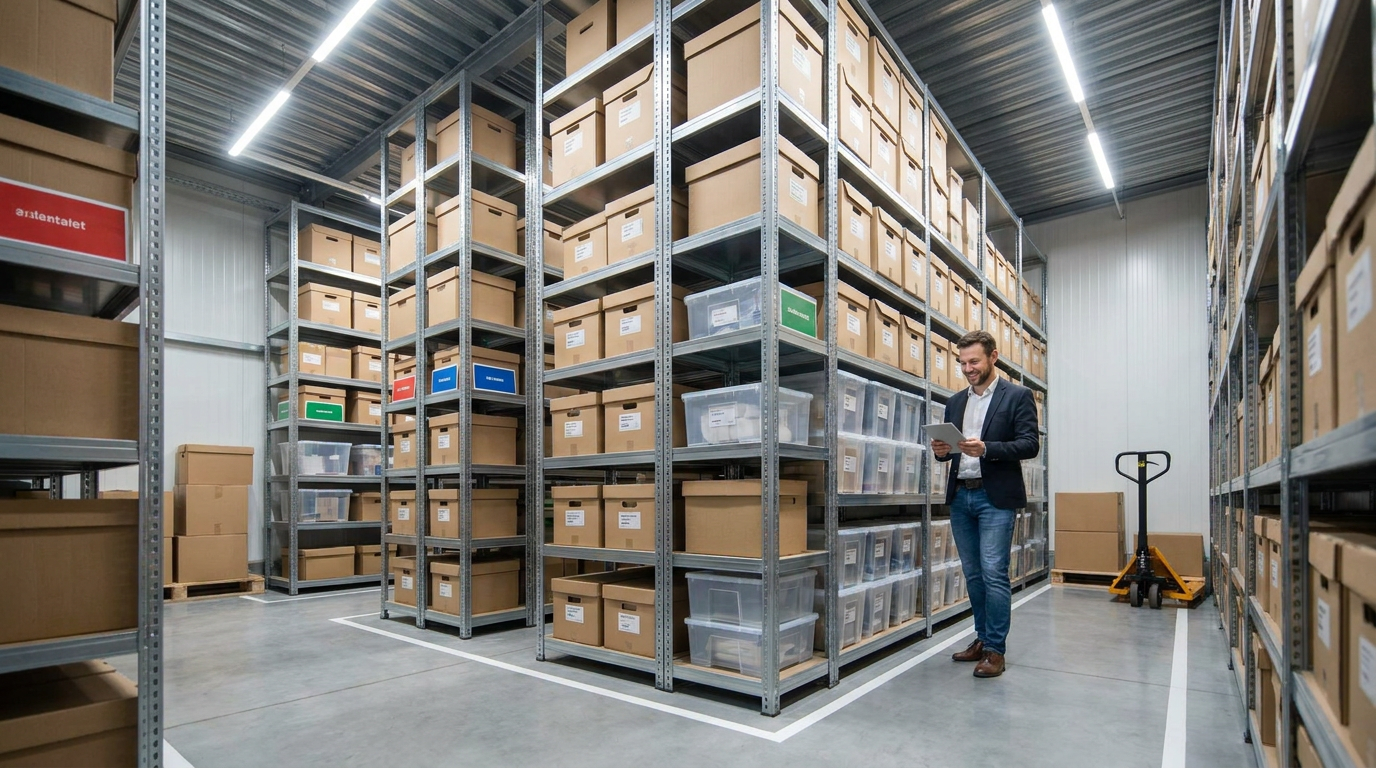
Designate means creating specific zones within your unit based on access frequency and product category. High-turnover items belong within 6 feet of the entrance. Medium-rotation stock occupies the middle zone. Seasonal and archival inventory goes in the rear. This zone system reduces average retrieval time from 8 minutes to under 5 minutes per item.
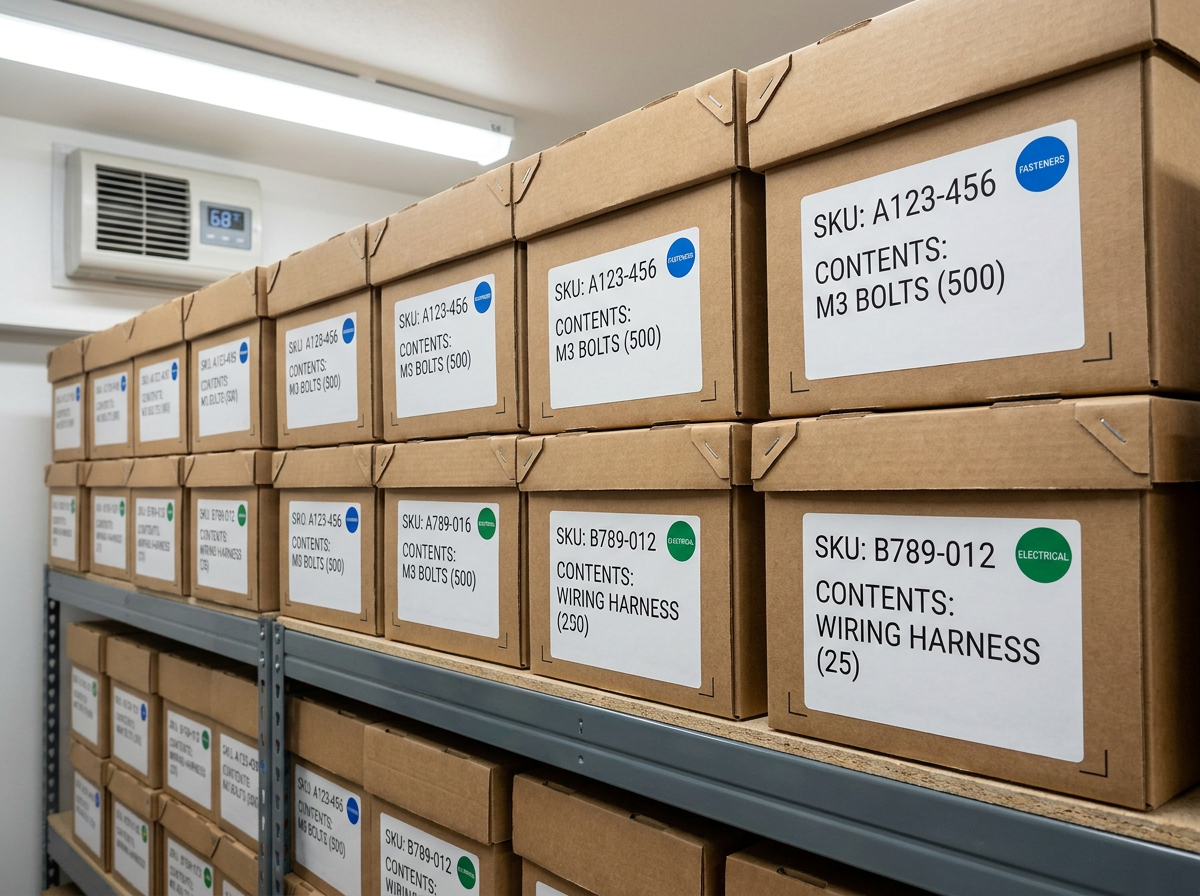
Document requires maintaining detailed records of every item's location within the unit. Use inventory management software like Sortly, inFlow, or Cin7 to create a digital map synced with your storage layout. Assign each shelf and bin a unique identifier. Businesses using digital inventory tracking report 67% fewer picking errors compared to paper-based systems.
Defend focuses on protecting inventory from theft, damage, and environmental factors. Select facilities with comprehensive security features including gated access, security cameras, and adequate lighting. Consider tenant protection plans that cover burglary, fire, and water damage for stored business assets.

The Golden Rule of Inventory Storage
The golden rule of inventory management is FIFO: First In, First Out. This principle ensures older stock sells before newer arrivals, preventing product expiration, obsolescence, and quality degradation. Implementing FIFO in a self storage environment requires intentional layout design and consistent receiving procedures.
Position newer inventory behind existing stock rather than in front. Create clearly marked receiving and shipping zones. Use date labels on all containers showing arrival date and expiration date where applicable. For perishable or date-sensitive products, color-coded labels by month provide instant visual identification of aging inventory.
FIFO compliance becomes critical for businesses storing products with shelf life limitations. According to inventory management research, proper FIFO implementation reduces product waste by 23% and improves inventory turnover ratios by 18%. Even for non-perishable goods, FIFO prevents quality issues from extended storage periods and ensures customers receive the freshest available stock.
7 Storage Techniques for Maximum Efficiency
Professional warehouse managers apply seven core techniques to maximize storage efficiency. Adapting these methods to self storage units allows small businesses to achieve warehouse-level organization in compact spaces.
1. Vertical Stacking with Shelving Units: Install industrial shelving rated for 250 to 500 pounds per shelf. Heavy-duty wire shelving from manufacturers like Uline, Grainger, or Metro costs $150 to $400 per unit and increases usable storage volume by 200% compared to floor stacking alone. Anchor shelving to walls where permitted to prevent tipping.
2. Clear Container System: Store all inventory in clear plastic bins with locking lids. Visibility eliminates the need to open containers during inventory checks. Standardize container sizes across your operation for stackability. Label all six sides of each container for identification regardless of orientation.
3. Aisle Planning: Maintain minimum 36-inch aisles between shelving rows for safe navigation and cart access. Primary aisles leading to high-turnover zones should be 48 inches wide to accommodate hand trucks and dollies. According to Attic Plus Storage's business inventory guide, proper aisle planning reduces workplace injuries by 34% in storage environments.
4. ABC Classification: Categorize inventory by sales velocity. A-items (top 20% of products generating 80% of revenue) go in the most accessible locations. B-items (next 30% of products) occupy secondary positions. C-items (remaining 50% of slow-moving stock) store in less accessible areas. Review classifications quarterly as sales patterns shift.
5. Pallet Organization: For bulk inventory, use standard 48x40 inch pallets that fit efficiently in 10x20 and larger units. A 10x20 unit accommodates 8 to 10 pallets with adequate aisle space. Stack pallets no more than two high unless using pallet racking. Secure stacked pallets with stretch wrap to prevent shifting.
6. Mobile Shelving: Rolling shelf units on heavy-duty casters allow reconfiguration as inventory needs change. Position mobile units perpendicular to fixed shelving to create adjustable aisle widths. Lock casters during normal operations to prevent movement.
7. Overhead Storage: Utilize ceiling height for lightweight, infrequently accessed items. Install overhead platforms or use the top shelves of tall shelving units for seasonal decorations, archived documents, and backup supplies. Keep a step ladder in the unit for safe overhead access.
Items Prohibited in Self Storage Units
Self storage facilities prohibit certain items for safety, legal, and insurance reasons. Storing prohibited items voids tenant protection coverage and may result in lease termination. Understanding these restrictions prevents costly compliance issues and protects neighboring tenants.
Hazardous materials including gasoline, propane, paint thinners, pesticides, and compressed gases are universally prohibited. According to SmartStop Self Storage's business guide, hazardous material violations represent the leading cause of lease terminations for commercial tenants. Contractors must store flammable materials at licensed hazmat facilities.
Perishable food products attract pests and create health hazards. Non-perishable packaged foods with extended shelf life may be permitted at some facilities with proper containerization. Always verify food storage policies with facility management before storing any consumable products.
Living things including plants, animals, and any biological materials are prohibited. This includes plant nursery stock, aquarium supplies with live organisms, and agricultural products. Temperature fluctuations and lack of ventilation make self storage units unsuitable for living organisms.
Illegal items and stolen property violate both facility policies and criminal law. Facilities cooperate with law enforcement investigations and may inspect units with proper legal authorization. Maintain purchase documentation for all stored inventory to verify legitimate ownership.
Weapons and ammunition face restrictions at most facilities. Some locations permit properly secured firearms in compliance with state and local laws. Verify specific policies before storing any weapons or ammunition. Commercial firearms dealers typically require specialized storage facilities with enhanced security.
Security Best Practices for Business Inventory
Protecting business inventory requires layered security combining facility features, personal measures, and insurance coverage. The average commercial burglary results in $8,000 to $15,000 in losses according to FBI crime statistics. Proper security measures reduce both theft risk and insurance premiums.
Select facilities with comprehensive security infrastructure. Essential features include perimeter fencing with controlled gate access, security cameras monitoring common areas and unit corridors, LED lighting throughout the property, and individual unit alarms. Facilities offering 24/7 access should provide unique access codes for each tenant to create audit trails of entry and exit times.
Add personal security measures to complement facility features. Use high-quality disc locks or cylinder locks rated for commercial use. Standard padlocks can be cut in under 30 seconds with bolt cutters. Disc locks require specialized tools and significantly more time to defeat. Consider adding a secondary lock or hasp for high-value inventory units.
Tenant protection plans provide financial coverage when security measures fail. SafeLease protection plans cover stored inventory against burglary, fire, water damage, and other covered perils. Coverage levels typically range from $2,000 to $15,000 depending on inventory value. Review coverage limits annually and adjust as inventory values change.
Maintain detailed inventory documentation including photographs, serial numbers, and purchase receipts. Store backup copies of inventory records off-site or in cloud storage. This documentation supports insurance claims and helps law enforcement recover stolen property. Update records monthly or whenever significant inventory changes occur.
Climate Considerations for Inventory Protection
Temperature and humidity fluctuations damage sensitive inventory over time. Standard storage units experience temperature swings from 32°F to over 100°F depending on geographic location and season. Humidity levels can exceed 80% in non-climate-controlled environments, promoting mold growth and material degradation.
Products requiring climate control include electronics, leather goods, wooden furniture, musical instruments, pharmaceuticals, cosmetics, artwork, wine, and any temperature-sensitive merchandise. Climate-controlled units maintain temperatures between 55°F and 80°F year-round with humidity levels below 55%. The additional cost of $25 to $75 per month prevents thousands of dollars in inventory damage.
For businesses in Estes Park and similar mountain communities, altitude and seasonal temperature extremes create unique storage challenges. Winter temperatures regularly drop below 0°F while summer days can exceed 90°F. These 90-degree temperature swings stress materials and accelerate product degradation. Evaluate your inventory's sensitivity before selecting standard versus climate-controlled storage.
Even in standard units, protective measures reduce environmental damage. Elevate inventory on pallets or shelving to prevent moisture absorption from concrete floors. Use moisture-absorbing products like silica gel packets or DampRid in enclosed containers. Wrap sensitive items in acid-free paper or breathable fabric covers rather than plastic, which traps moisture.
Inventory Management Software Integration
Modern inventory management requires software integration between your storage unit and business operations. Manual tracking methods fail as inventory complexity increases. Digital systems provide real-time visibility, automated reorder alerts, and detailed analytics for inventory optimization.
Popular inventory management platforms for small business include Sortly (starting at $29/month), inFlow ($89/month), Cin7 ($349/month), and Zoho Inventory (free tier available). These platforms offer mobile apps for scanning barcodes during receiving and picking, cloud synchronization across devices, and integration with e-commerce platforms like Shopify, Amazon, and WooCommerce.
Create a digital map of your storage unit within your chosen software. Assign location codes to each shelf, bin, and floor zone. When receiving inventory, scan items and assign storage locations. When picking orders, the system directs workers to exact locations, reducing search time and picking errors. Businesses implementing location-based inventory tracking report 40% faster order fulfillment.
Set automated reorder points based on sales velocity and lead times. The software alerts you when stock levels drop below thresholds, preventing stockouts. Review inventory reports monthly to identify slow-moving items, optimize storage locations, and adjust purchasing quantities based on actual demand patterns.
Cost Optimization Strategies
Self storage costs represent a significant ongoing expense for inventory-dependent businesses. Strategic optimization reduces monthly costs while maintaining adequate storage capacity. The goal is matching storage investment to actual inventory requirements without overpaying for unused space.
Start with accurate demand forecasting. Analyze 24 months of sales data to identify seasonal patterns. Many businesses can downsize units during slow seasons and upgrade temporarily during peak periods. Month-to-month leases without long-term commitments enable this flexibility. Have questions about flexible rental terms and how they work for business tenants? Most facilities accommodate seasonal adjustments with adequate notice.
Negotiate rates for long-term commitments when cash flow allows. Many facilities offer 5% to 15% discounts for 6-month or 12-month prepayment. Calculate the discount value against the flexibility cost of month-to-month rental. For stable businesses with predictable inventory needs, prepayment discounts provide meaningful savings.
Consider unit sharing arrangements with complementary businesses. Two small businesses with combined inventory fitting a single larger unit can split costs while each maintaining dedicated zones. Formalize sharing arrangements with written agreements covering access schedules, liability, and cost allocation.
Evaluate total cost including travel time and vehicle expenses. A slightly more expensive unit closer to your primary business location may cost less overall when factoring fuel, vehicle wear, and labor time for inventory trips. Calculate your effective hourly rate and multiply by expected monthly travel time to determine true location cost.
Access and Operational Efficiency
Storage unit access patterns directly impact operational efficiency. Businesses requiring frequent inventory access need facilities with extended hours and convenient loading features. Evaluate access requirements before signing a lease to avoid operational constraints.
24/7 access eliminates scheduling constraints for businesses with irregular hours or emergency restocking needs. Retail businesses preparing for weekend sales events, contractors responding to emergency service calls, and e-commerce operations shipping orders daily all benefit from unrestricted access. Verify that 24/7 access includes both gate entry and unit access, as some facilities restrict interior building access during overnight hours.
Drive-up units provide direct vehicle access to your unit door. This configuration eliminates cart transportation through hallways and elevators, reducing loading time by 50% compared to interior units. For businesses moving heavy or bulky inventory, drive-up access is essential. A locally owned storage facility with drive-up units and 24/7 access supports the operational demands of active business inventory management.
Consider proximity to major transportation routes. Units located near highway access reduce delivery and pickup times. For businesses receiving shipments from suppliers or shipping orders to customers, location convenience translates directly to labor cost savings and faster fulfillment times.
Compliance and Documentation Requirements
Business inventory storage involves compliance obligations that personal storage does not. Maintaining proper documentation protects your business legally and supports insurance claims, tax deductions, and financial reporting requirements.
Keep detailed records of all stored inventory including item descriptions, quantities, purchase dates, costs, and current market values. Update records whenever inventory enters or leaves storage. These records support insurance claims, demonstrate inventory ownership, and provide audit trails for tax purposes.
Storage rental expenses are generally tax-deductible as business expenses. Maintain lease agreements, payment receipts, and records of business use to support deductions. Consult with a tax professional regarding specific deductibility rules for your business structure and jurisdiction. The IRS requires documentation showing storage is used exclusively or primarily for business purposes.
Review your business insurance policy regarding off-site inventory coverage. Many commercial policies exclude or limit coverage for inventory stored away from your primary business location. You may need a rider or separate policy to fully cover stored inventory. Tenant protection plans offered by storage facilities supplement but do not replace comprehensive business insurance.
For businesses in regulated industries, verify that self storage meets compliance requirements. Pharmaceutical companies, food manufacturers, and medical device distributors face specific storage regulations that may require licensed facilities rather than standard self storage. Consult industry-specific regulations before storing regulated products.
Scaling Storage as Your Business Grows
Successful businesses outgrow their initial storage solutions. Planning for scalability prevents operational disruptions during growth phases. The flexibility of self storage supports business expansion without the capital investment of owned warehouse space.
Monitor storage utilization monthly. When units consistently exceed 80% capacity, begin evaluating larger options. Operating at full capacity reduces efficiency, increases product damage risk, and eliminates buffer space for unexpected inventory increases. Proactive upsizing maintains operational efficiency during growth.
Many facilities offer unit transfer options allowing businesses to move to larger units within the same property. This simplifies scaling by eliminating the need to research new facilities, establish new access credentials, and transport inventory across town. Ask about transfer policies and any associated fees when selecting a facility.
For businesses approaching the limits of self storage, evaluate the transition point to commercial warehouse space. When monthly storage costs exceed $1,500 to $2,000 or when operations require specialized features like loading docks, climate zones, or office space, dedicated warehouse facilities may become more cost-effective. Self storage provides an excellent bridge solution during the growth phase between home-based operations and full warehouse facilities.
Frequently Asked Questions
What are the 4 D's of self storage?
The 4 D's are Declutter, Designate, Document, and Defend. Declutter removes obsolete inventory before storage. Designate creates organized zones based on access frequency. Document maintains detailed records of item locations. Defend protects inventory through security measures and insurance coverage. Following this framework transforms storage units into efficient business operations.
What is the golden rule for inventory?
FIFO (First In, First Out) is the golden rule of inventory management. This principle ensures older stock sells before newer arrivals, preventing expiration, obsolescence, and quality degradation. Implement FIFO by positioning newer inventory behind existing stock and using date labels on all containers.
What are the 7 storage techniques?
The seven professional storage techniques are: vertical stacking with industrial shelving, clear container systems for visibility, strategic aisle planning with 36-inch minimum widths, ABC classification by sales velocity, pallet organization for bulk inventory, mobile shelving for flexibility, and overhead storage for lightweight infrequent items.
Why shouldn't certain items be kept in self storage?
Prohibited items include hazardous materials (fire and explosion risk), perishable foods (pest attraction), living things (unsuitable environment), illegal items (legal liability), and certain weapons (security concerns). Storing prohibited items voids insurance coverage, violates lease terms, and may result in legal consequences.
How much does business storage typically cost?
Business storage costs range from $75 to $550 monthly depending on unit size and features. A 5x10 unit suitable for small e-commerce operations costs $75 to $150. A 10x20 unit for full retail inventory runs $250 to $450. Climate control adds $25 to $75 monthly. These costs are significantly lower than commercial warehouse leases averaging $6 to $12 per square foot annually.
Can I run my business from a storage unit?
Most self storage facilities prohibit using units as primary business locations. Storage units lack proper ventilation, electrical capacity, and safety features for occupied workspaces. However, you can use storage units for inventory warehousing, equipment storage, and periodic access for picking and packing operations. Check facility policies regarding commercial use limitations.
|