Storage Unit Security Checklist: 15 Expert Tips for 2026 |
| STORAGE UNIT SECURITY CHECKLIST: 15 EXPERT TIPS
⏱ 16 min read ·
📄 #3,019 words
Protect your belongings with this 15-point storage unit security checklist. Expert tips on locks, cameras, access control, and insurance from industry pros.
|
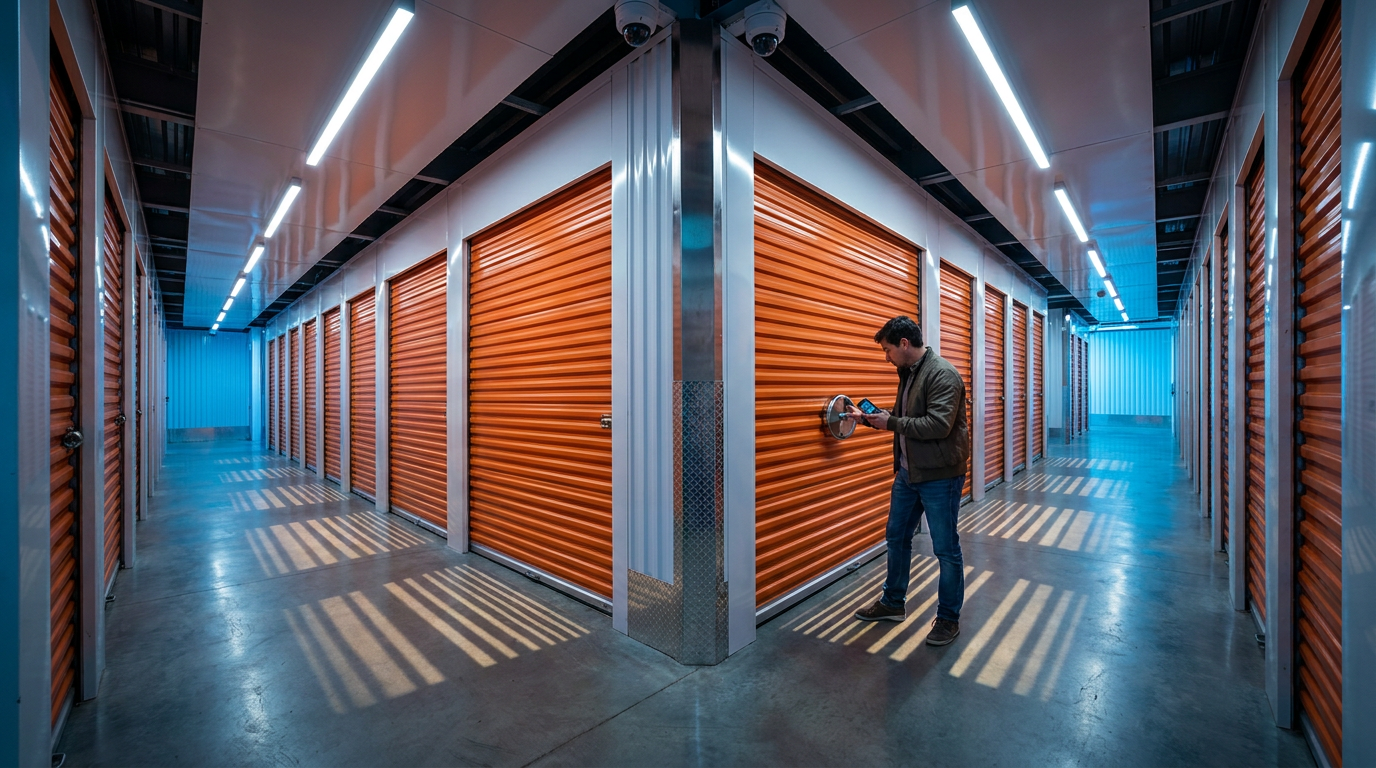
A secure storage unit requires controlled gate access, 24/7 surveillance cameras, bright LED lighting, a high-quality disc lock, and verified insurance coverage. These five elements form the foundation of theft prevention, but truly protecting your belongings demands attention to 15 specific security factors that most renters overlook.
| Key Points: | |
|---|---|
| • | Facilities with layered security (gate access, cameras, lighting, staff) experience 78% fewer break-ins according to Self Storage Association data |
| • | Disc and cylinder locks cost $15-40 and resist bolt cutters better than standard padlocks |
| • | Storage insurance costs $8-25 per month for $2,000-10,000 in coverage |
| • | Climate-controlled units maintain 55-80 degrees Fahrenheit, protecting electronics and documents |
| • | Visit facilities at 9 PM or later to verify lighting and security measures actually function |
Why Storage Unit Security Matters More Than Ever
The Federal Bureau of Investigation reports property crime affects approximately 6.9 million Americans annually, with storage facilities representing a growing target for organized theft rings. According to a 2024 report from the Self Storage Association, facilities without comprehensive security measures experience break-in rates 3-4 times higher than those with layered protection systems.
Professional thieves now use angle grinders, hydraulic bolt cutters, and even social engineering tactics to access storage units. A 2023 study by Security Magazine found that 62% of storage facility break-ins occurred at locations with only basic security measures. The average loss per incident exceeded $4,200 in stored goods.
This checklist covers facility-level security features you should verify before signing a lease, unit-level protections you control directly, and documentation practices that protect you if theft occurs despite precautions.
Facility Security Features: Tips 1-7
Tip 1: Verify Controlled Gate Access with Unique Entry Codes
Controlled gate access represents your first line of defense against unauthorized entry. According to PTI Security Systems, a leading access control manufacturer, facilities using individual PIN codes experience 67% fewer unauthorized access incidents than those using shared codes or basic key systems.
Look for facilities requiring unique access codes for each tenant. These systems create digital logs showing exactly who entered the property and when. Advanced facilities now use smartphone apps through providers like Nokē Smart Entry or PTI EasyCode, which eliminate code sharing and provide real-time access notifications.
Ask the facility manager these specific questions: How often are access codes changed? Can codes be shared with others? Does the system log entry times? At Estes Park Storage, our gated access system assigns unique codes to each tenant and maintains complete entry logs for added accountability.
Tip 2: Confirm 24/7 Camera Coverage Over Critical Areas
Surveillance cameras deter theft and provide evidence if break-ins occur, but camera placement matters more than camera quantity. A 2024 analysis by Avigilon, a Motorola Solutions company, found that facilities with cameras covering entry gates, hallway intersections, and unit doors reduced theft by 54% compared to facilities with perimeter-only coverage.
During your facility tour, verify cameras monitor these specific locations: the main entrance gate, each building entrance, hallway intersections, and the area directly in front of your potential unit. Ask whether footage is recorded locally or stored in cloud systems, and how long recordings are retained. Industry standard retention is 30-90 days.
Modern facilities increasingly use AI-powered systems from companies like Verkada or Rhombus that detect unusual activity patterns and alert staff in real-time. These systems cost facilities $200-500 per camera annually but significantly improve response times to suspicious activity.
Tip 3: Assess Lighting Quality Across the Entire Property
Bright, consistent lighting eliminates shadows where criminals can work undetected. The Illuminating Engineering Society recommends 5-10 foot-candles of illumination for parking areas and 10-20 foot-candles for walkways and unit access areas. Most smartphone light meter apps can measure these levels during your evening visit.
LED lighting has become the industry standard because it provides brighter output at lower operating costs. According to the U.S. Department of Energy, LED fixtures produce 75-100 lumens per watt compared to 15-20 lumens for incandescent bulbs, making comprehensive coverage economically feasible for facility operators.
Visit the facility after 9 PM to verify lighting actually functions. Check for dark spots near building corners, between rows of units, and around dumpster areas. Our facility at Estes Park Storage features LED lighting throughout the property, ensuring visibility during all hours of 24/7 access.
Tip 4: Look for Perimeter Fencing and Physical Barriers
Perimeter security creates physical obstacles that delay intruders and channel all traffic through monitored access points. The American Society for Industrial Security recommends 8-foot fencing with anti-climb features such as barbed wire, razor ribbon, or outward-angled extensions for commercial storage facilities.
Effective perimeter barriers include chain-link fencing with privacy slats, concrete block walls, or steel panel fencing. Each option offers different trade-offs between visibility, durability, and cost. Chain-link with barbed wire costs $15-25 per linear foot installed, while decorative steel panels run $30-50 per linear foot.
During your site visit, walk the entire perimeter looking for gaps, damaged sections, or areas where vegetation provides cover for cutting tools. Check that gates close completely and latch securely. A single weak point in perimeter security can render other measures ineffective.
Tip 5: Confirm On-Site Staff Presence and Patrol Schedules
Human oversight adds a layer of security that technology alone cannot replicate. According to a 2023 survey by Inside Self-Storage magazine, facilities with on-site managers during business hours reported 41% fewer security incidents than unstaffed locations. Staff presence deters opportunistic theft and enables rapid response to suspicious activity.
Ask about staffing schedules: What hours is the office open? Does staff conduct regular property walkthroughs? How quickly can someone respond to an after-hours alarm? Some facilities contract with security patrol services like Allied Universal or Securitas for regular drive-throughs during overnight hours.
On-site managers also maintain facility cleanliness and identify maintenance issues before they become security vulnerabilities. A well-maintained facility signals active management and discourages criminal activity.
Tip 6: Check for Individual Unit Alarms
Individual unit alarms detect unauthorized access attempts at your specific unit rather than relying solely on perimeter security. When someone opens your unit door without first disarming the system through proper access procedures, the alarm triggers immediate notification to facility staff or a central monitoring station.
PTI Security Systems and OpenTech Alliance manufacture the most common individual alarm systems used in the storage industry. These systems typically add $5-15 per month to rental costs but provide significantly faster response times than camera-only monitoring. According to PTI data, alarmed units experience 89% fewer successful break-ins than non-alarmed units at the same facility.
Ask whether alarms connect to on-site staff, a 24/7 monitoring center, or both. Monitoring center response typically takes 30-60 seconds for alarm verification and 3-5 minutes for security dispatch if needed.
Tip 7: Verify Visitor Access Policies
Lax visitor policies create opportunities for tailgating, where unauthorized individuals follow legitimate tenants through access gates. The Self Storage Association recommends facilities require all visitors to register and receive temporary access credentials rather than allowing tenants to simply let others in.
Strict facilities require visitors to present identification and sign a log before receiving temporary gate codes. Some facilities prohibit visitor access entirely, requiring tenants to be present whenever their unit is accessed. These policies reduce the risk of theft by limiting who can enter the property.
Ask the facility manager: Can I give my access code to movers or family members? What identification do visitors need to provide? Are there specific hours when visitors are prohibited? Clear policies protect both you and other tenants from unauthorized access.
Unit-Level Protection: Tips 8-11
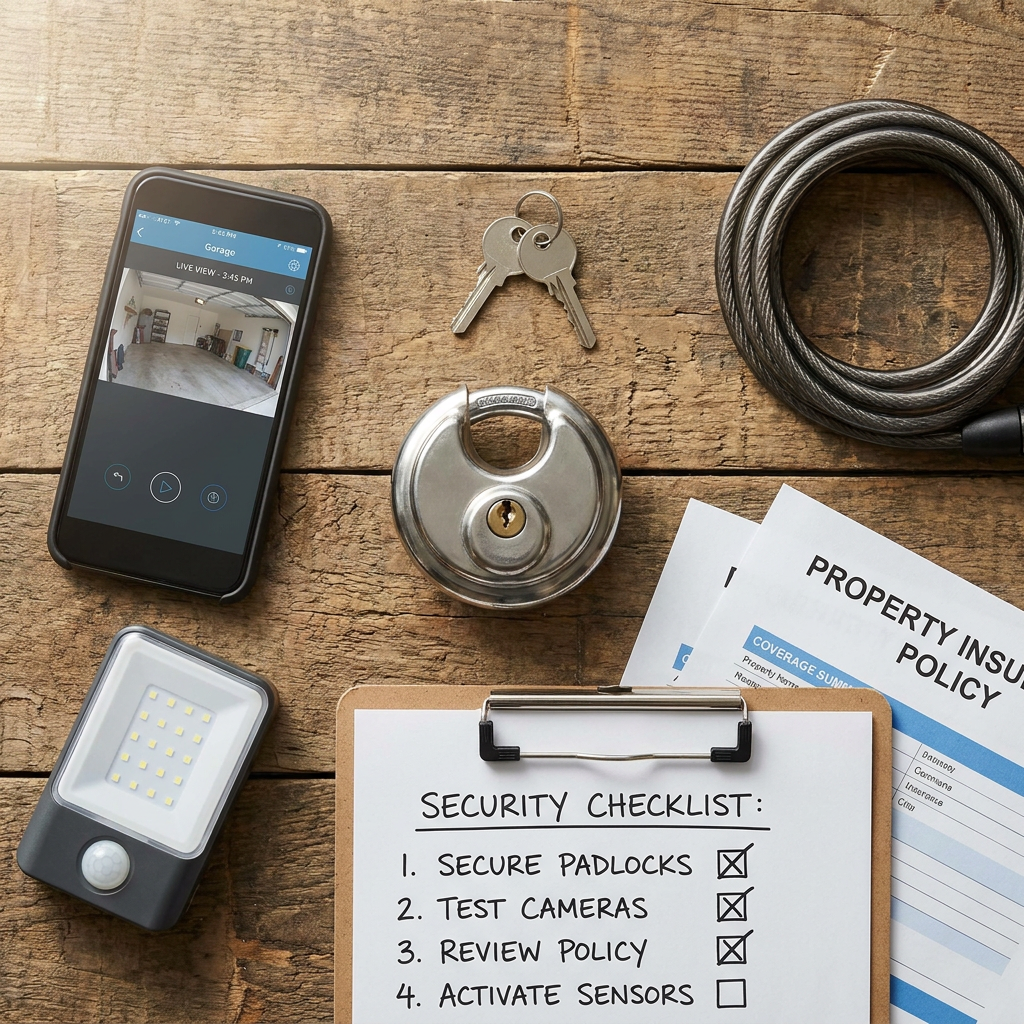
Tip 8: Invest in a High-Quality Disc or Cylinder Lock
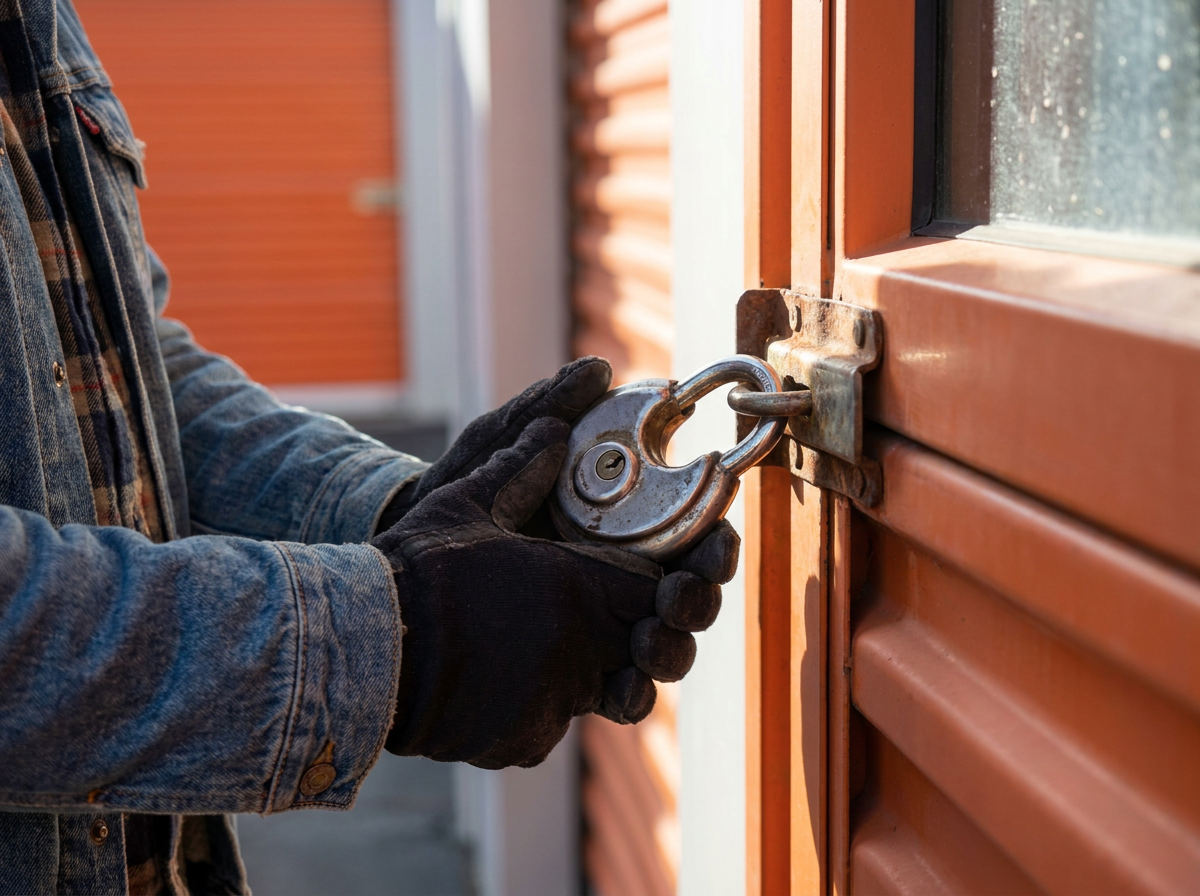
Your lock represents the final barrier between thieves and your belongings. Standard padlocks with exposed shackles can be cut in under 30 seconds with bolt cutters, according to testing by Master Lock. Disc locks and cylinder locks eliminate this vulnerability by encasing the shackle within the lock body.
| Lock Type | Price Range | Bolt Cutter Resistance | Best For |
|---|---|---|---|
| Standard Padlock | $5-15 | Low (under 30 seconds) | Not recommended |
| Disc Lock (ABUS, Master Lock) | $15-30 | High (shackle protected) | Most storage units |
| Cylinder Lock (Medeco, Abloy) | $25-50 | Very High (no exposed shackle) | High-value storage |
| Smart Lock (Master Lock Bluetooth) | $40-80 | High (plus access logging) | Shared access needs |
ABUS, Master Lock, and Medeco manufacture the most respected storage locks in the security industry. The ABUS 20/70 Diskus and Master Lock 40DPF represent excellent mid-range options at $20-30. For maximum security, Medeco and Abloy cylinder locks provide pick resistance ratings exceeding 15 minutes.
Tip 9: Position Valuables Strategically Within Your Unit
Even if a thief breaches your lock, strategic item placement can minimize losses. Security consultants recommend placing high-value items at the back of your unit, behind larger furniture or boxes containing low-value items. This approach exploits the time pressure thieves face.
According to loss prevention research from the Loss Prevention Research Council, most storage unit thieves spend under 5 minutes inside a unit before fleeing. They grab visible items near the door first. By positioning valuable electronics, jewelry, or documents behind bulky furniture, you reduce the likelihood of losing your most important possessions.
Consider using a small safe bolted to the unit floor for irreplaceable documents or compact valuables. Floor safes rated TL-15 by Underwriters Laboratories resist attack for at least 15 minutes, exceeding the typical theft window.
Tip 10: Avoid Storing Prohibited or High-Risk Items
Certain items attract thieves or violate facility policies, potentially voiding your insurance coverage. Most facilities prohibit firearms, cash, drugs, hazardous materials, and perishable food. Storing prohibited items can result in lease termination and denial of insurance claims.
Beyond prohibited items, consider whether certain possessions belong in storage at all. Irreplaceable family heirlooms, original legal documents, and items with sentimental value exceeding their insurable worth may be safer in a bank safe deposit box ($50-300 annually) or home safe.
Review your lease agreement carefully for the complete list of prohibited items. Common restrictions include propane tanks, gasoline, paint, batteries, and any items with strong odors that could affect neighboring units.
Tip 11: Consider Climate-Controlled Storage for Sensitive Items
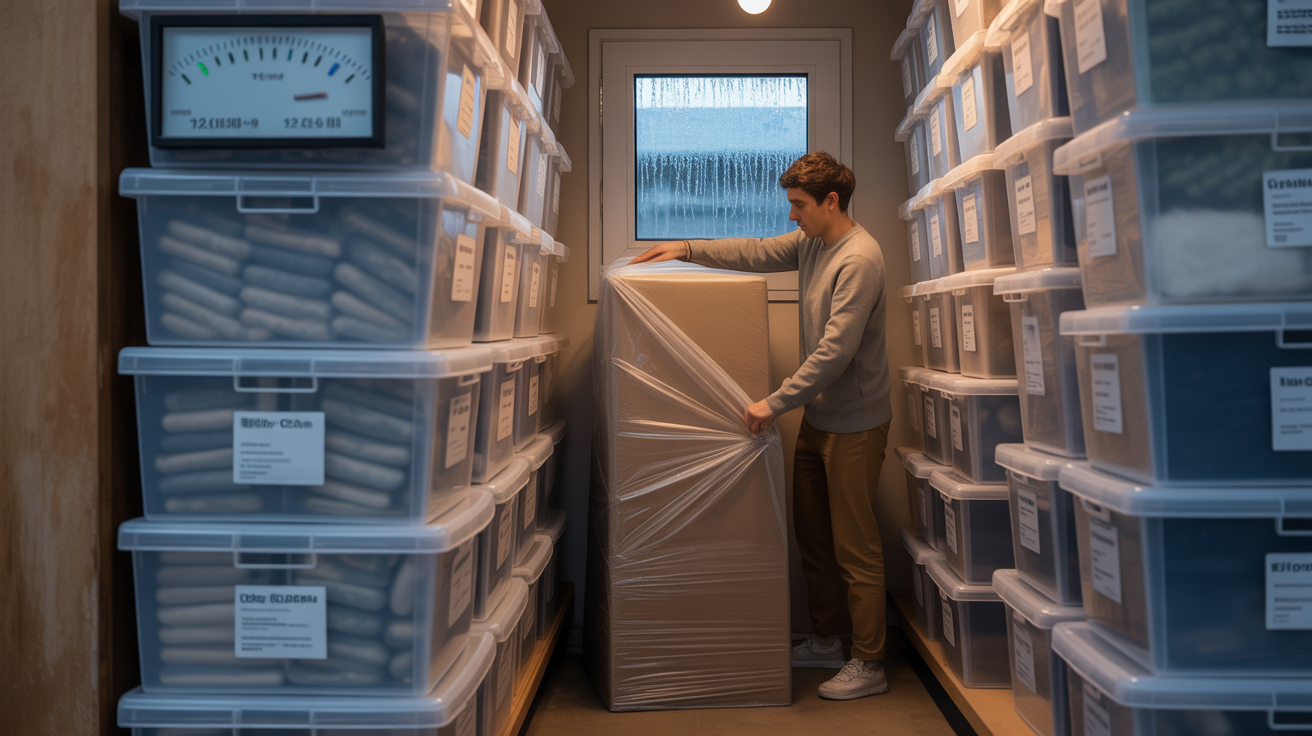
Climate control protects against temperature and humidity damage, which can be as devastating as theft for certain items. Units maintaining 55-80 degrees Fahrenheit and 30-50% relative humidity prevent warping, mold growth, rust, and electronic component degradation.
Items requiring climate control include: wooden furniture, leather goods, electronics, photographs, vinyl records, musical instruments, wine collections, and important documents. According to the National Archives and Records Administration, paper documents stored above 75 degrees Fahrenheit degrade 2-3 times faster than those stored at 65-70 degrees.
Climate-controlled units typically cost 20-50% more than standard units. A 10x10 climate-controlled unit runs $150-250 per month in most markets compared to $100-175 for standard units. This premium provides significant protection for temperature-sensitive belongings.
Documentation and Insurance: Tips 12-15
Tip 12: Create a Detailed Inventory with Photographs
Comprehensive documentation enables accurate insurance claims and helps law enforcement recover stolen property. The Insurance Information Institute recommends photographing each item individually, capturing serial numbers, brand names, and any distinguishing features.
Create a spreadsheet listing each item with the following information: description, brand, model number, serial number, estimated value, and purchase date if known. Store this inventory in cloud storage through services like Google Drive, Dropbox, or iCloud so it remains accessible even if your home computer is compromised.
Update your inventory whenever you add or remove items from storage. Date-stamped photographs prove item condition at the time of storage, which becomes critical if you need to file an insurance claim months or years later.
Tip 13: Secure Appropriate Insurance Coverage
Most homeowners and renters insurance policies provide limited coverage for items in storage, typically 10% of your total personal property coverage. According to the Insurance Information Institute, this coverage often proves insufficient for valuable stored items and may include higher deductibles for off-premises losses.
Storage facility insurance, offered through providers like Bader Company or MiniCo Insurance Agency, costs $8-25 per month for $2,000-10,000 in coverage. These policies typically cover theft, fire, water damage, and vandalism with deductibles ranging from $50-250.
Review policy exclusions carefully. Most storage insurance excludes damage from pests, mold (unless climate-controlled), earthquakes, and floods. Items with values exceeding $2,500 per item often require scheduled coverage with appraisals.
Tip 14: Visit Your Unit Regularly
Regular visits allow you to detect problems before they escalate. Security experts recommend visiting your storage unit at least once per month to verify your lock remains intact, check for signs of attempted entry, and ensure no water damage or pest issues have developed.
During each visit, inspect the lock for scratches or tool marks that might indicate tampering attempts. Check the door seal for gaps that could allow water or pest entry. Look inside for any signs of moisture, mold, or rodent droppings.
Vary your visit times occasionally. Visiting at different hours helps you assess facility security during various conditions and may reveal issues not apparent during typical business hours. Our 24/7 access at Estes Park Storage allows tenants to check their units whenever convenient.
Tip 15: Read Customer Reviews for Security-Related Complaints
Online reviews reveal real-world security performance that facility tours cannot show. Search Google Reviews, Yelp, and the Better Business Bureau for mentions of break-ins, broken gates, non-functional cameras, or poor management response to security incidents.
Pay particular attention to how management responds to negative reviews about security issues. Defensive responses or denial of problems suggests poor accountability. Constructive responses explaining corrective actions indicate responsible management.
According to BrightLocal's 2024 consumer survey, 87% of consumers read online reviews for local businesses. For storage facilities specifically, reviews mentioning "break-in," "theft," "gate," or "camera" provide the most relevant security intelligence.
Frequently Asked Questions About Storage Unit Security
What is the most money ever found in a storage unit?
The largest documented cash find occurred in 2011 when a San Jose, California storage unit purchased at auction contained $7.5 million in cash. However, such discoveries remain extraordinarily rare. Most auction purchases yield average returns of $300-500 according to Storage Auctions USA data. Storing large amounts of cash violates most facility lease agreements and voids insurance coverage.
How long can bedbugs live in a storage unit?
Bedbugs can survive 6-12 months without feeding in storage conditions, according to research published in the Journal of Economic Entomology. Temperature extremes affect survival rates: bedbugs die within 4 days at temperatures below 0 degrees Fahrenheit or above 120 degrees Fahrenheit. Standard storage units without climate control may experience lethal temperatures during extreme seasons, but climate-controlled units maintain survival-friendly conditions year-round.
Can I sleep in my storage unit during the day?
Sleeping in storage units is illegal in all 50 states and violates every standard storage facility lease agreement. Storage units lack ventilation, fire safety systems, and sanitation facilities required for human habitation. Facilities actively monitor for habitation and will terminate leases immediately upon discovery. Violations may result in criminal trespassing charges and civil liability for the facility.
What are the golden rules of storage?
The four golden rules of storage are: (1) Never store items worth more than you can insure; (2) Use climate control for anything damaged by temperature or humidity; (3) Create aisles within your unit for access and inspection; (4) Maintain a current inventory with photographs. These principles, recommended by the Self Storage Association, maximize protection while minimizing potential losses.
Are storage unit cameras enough to prevent theft?
Cameras alone reduce theft by approximately 20-30% according to security industry research, but layered security combining cameras with access control, lighting, and staff presence reduces theft by 70-80%. Cameras primarily serve as evidence-gathering tools and deterrents rather than active prevention measures. Professional thieves often wear masks and complete thefts before staff can respond to camera alerts.
What type of lock is best for a storage unit?
Disc locks and cylinder locks provide the best protection for storage units because they eliminate exposed shackles that bolt cutters can attack. The ABUS 20/70 Diskus ($25-30) offers excellent value, while Medeco cylinder locks ($40-60) provide maximum pick and drill resistance. Avoid standard padlocks regardless of brand, as their exposed shackles can be cut in under 30 seconds.
Do I need insurance for a storage unit?
Yes, dedicated storage insurance is strongly recommended because homeowners and renters policies typically limit off-premises coverage to 10% of total personal property limits. Storage-specific policies from providers like Bader Company cost $8-25 monthly for $2,000-10,000 in coverage with lower deductibles than standard homeowners claims. Verify coverage limits match your stored item values.
Complete Storage Unit Security Checklist
Use this printable checklist when evaluating storage facilities and setting up your unit:
| Category | Security Item | Verified |
|---|---|---|
| Facility | Controlled gate access with unique codes | |
| Facility | 24/7 camera coverage of critical areas | |
| Facility | Bright LED lighting (verified after dark) | |
| Facility | Perimeter fencing without gaps | |
| Facility | On-site staff during business hours | |
| Facility | Individual unit alarms available | |
| Facility | Strict visitor access policies | |
| Unit | High-quality disc or cylinder lock | |
| Unit | Valuables positioned at back of unit | |
| Unit | No prohibited items stored | |
| Unit | Climate control for sensitive items | |
| Documentation | Itemized inventory with photos | |
| Documentation | Insurance coverage verified | |
| Documentation | Monthly visit schedule set | |
| Documentation | Customer reviews checked |
Choosing a Secure Storage Facility in Estes Park
Finding a storage facility that meets all 15 security criteria requires careful evaluation. In the Estes Park area, factors like mountain weather, wildlife activity, and seasonal tourism create unique security considerations beyond standard urban facilities.
Temperature fluctuations in Estes Park can range from below zero in winter to above 90 degrees in summer, making climate considerations important for sensitive items. Wildlife including bears and rodents may attempt to access facilities storing food-scented items, making secure perimeters and proper storage practices essential.
Estes Park Storage at 1210 Woodstock Dr offers gated access, LED lighting, and surveillance cameras for tenants seeking secure storage solutions. Our drive-up units provide convenient access for loading and unloading, while our month-to-month leases offer flexibility without long-term commitments. Contact us at (970) 586-6811 or Help@LookingForStorage.com to discuss your storage security needs.
|