What Not to Put in a Storage Unit: 20 Prohibited Items |
| WHAT NOT TO PUT IN A STORAGE UNIT: 20 PROHIBITED ITEMS
⏱ 3 min read ·
📄 #405 words
Learn the 20 items prohibited in storage units, from flammables to perishables. Avoid fines, eviction, and legal trouble with this complete guide.
|
S torage facilities prohibit 20 categories of items that pose fire hazards, attract pests, create liability issues, or violate federal and state laws. These include perishable food, flammable liquids, hazardous chemicals, firearms, live animals, and illegal substances. Violating these rules can result in immediate eviction, loss of belongings, fines up to $10,000, and potential criminal charges.

| Key Points: | |
|---|---|
| • | Perishable food attracts rodents within 48 to 72 hours and creates mold within 2 weeks |
| • | Flammable materials like gasoline and propane can cause explosions affecting entire facilities |
| • | Storing prohibited items voids your insurance coverage and rental agreement |
| • | Firearms require special licensed storage; standard units cannot legally store weapons |
| • | Violations can result in 30 days notice to vacate, forfeiture of deposit, and legal action |
Why Storage Facilities Prohibit Certain Items
Storage facility rules exist to protect you, other renters, and the property itself. Fire codes require facilities to ban flammable materials because a single gallon of gasoline can generate explosive force equivalent to 14 sticks of dynamite. Insurance companies mandate these restrictions, and facilities that fail to enforce them risk losing coverage entirely.
Pest infestations spread rapidly in storage environments. A single unit containing food can attract mice that infiltrate 15 to 20 neighboring units within one month. Facilities face remediation costs of $5,000 to $25,000 for serious infestations, costs that ultimately get passed to renters through higher rates.
The Complete List of 20 Prohibited Items
Every storage facility maintains prohibited item policies, though specific rules vary. The following 20 categories represent industry standards enforced by most reputable facilities, including Estes Park Storage.
Food and Perishables (Items 1 to 3)
1. Perishable Food Items: Meat, dairy, eggs, and fresh produce decompose within days, creating odors that permeate walls and attract pests. Even sealed containers cannot prevent spoilage in non-climate-controlled environments where temperatures reach 100 degrees Fahrenheit in summer.
2. Non-Perishable Food: Canned goods, dry pasta, rice, and cereal attract rodents and insects regardless of packaging. Mice can chew through cardboard and thin plastic within hours. Store all food items in your home pantry or donate before moving items to storage.
3. Pet Food and Bird Seed: These items contain fats and proteins that attract pests faster than human food. A 20-pound bag of dog food can attract mice from 50 feet away through scent alone.
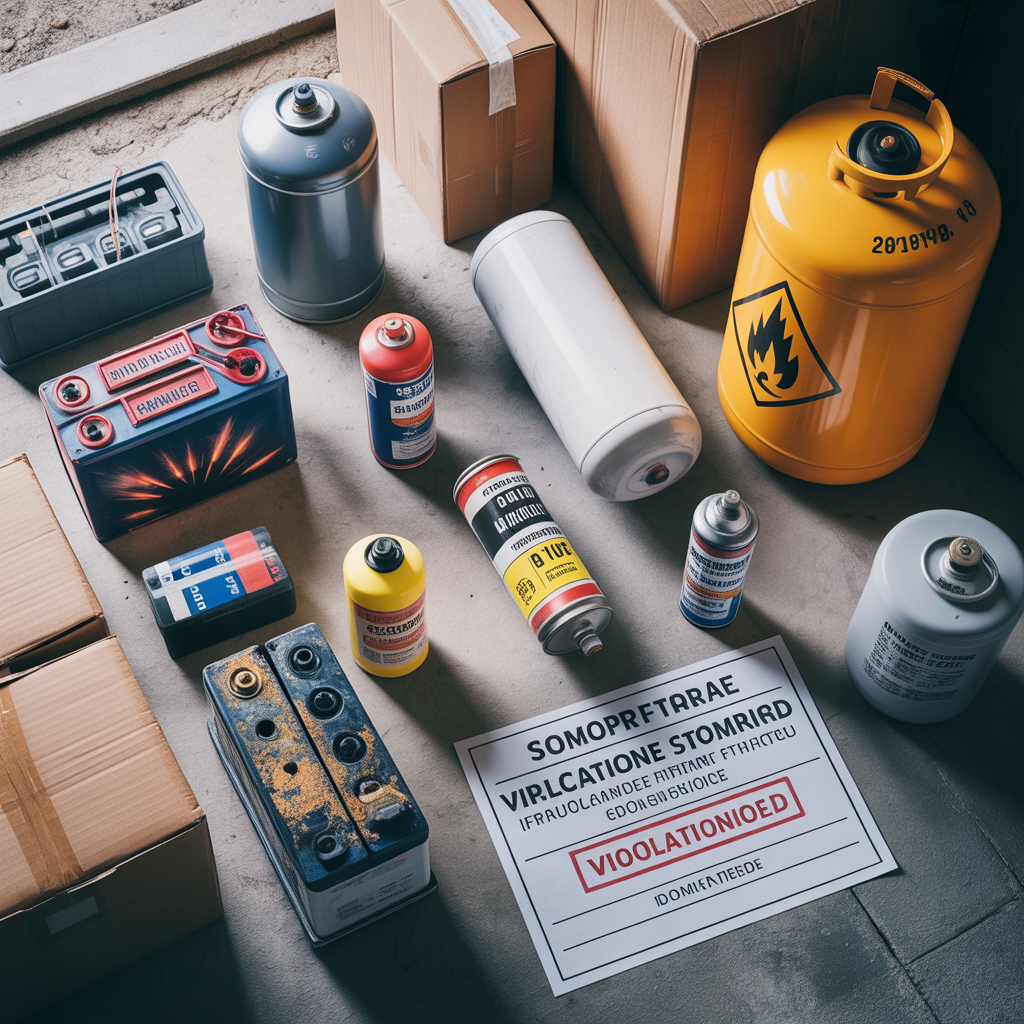
Flammable Materials (Items 4 to 8)
4. Gasoline and Fuel: Gas