Vehicle Storage Preparation Checklist for Long-Term Parking |
| VEHICLE STORAGE PREPARATION CHECKLIST FOR LONG-TERM PARKING
⏱ 13 min read ·
📄 #2,421 words
Complete 6-step vehicle storage checklist covering battery care, tire protection, fluid management, and pest prevention. Expert tips for 30+ day storage.
|
P reparing a vehicle for long-term storage (30+ days) requires six essential steps: thorough cleaning, fluid management, tire protection, battery maintenance, pest prevention, and proper covering. Skipping any step risks flat-spotted tires, dead batteries, corroded fuel systems, or rodent damage that costs $500 to $3,000 to repair.
| Key Points: | |
|---|---|
| • | Tire flat spots develop within 2-4 weeks under vehicle weight; inflate to max sidewall PSI (40-50) or use jack stands |
| • | Conventional batteries lose 1-3% charge monthly; disconnect negative terminal or use a trickle charger |
| • | Fill fuel tank to 90-95% capacity and add stabilizer to prevent condensation and phase separation |
| • | 80% of stored vehicle issues stem from batteries, tires, and fluids according to mechanic consensus |
| • | EVs should be stored at 50-80% charge in climate-controlled conditions when possible |
Whether you are storing a daily driver during an extended trip, protecting a classic car through winter, or parking a second vehicle seasonally, this comprehensive checklist covers every preparation step. The process takes 2-4 hours but prevents thousands in potential repairs.
Step 1: Complete Interior and Exterior Cleaning
A thorough cleaning is not cosmetic; it prevents corrosion, pest infestations, and permanent staining. Bird droppings, tree sap, and road salt left on paint for 30+ days can etch through clear coat and cause permanent damage. Interior food crumbs attract rodents that chew wiring harnesses costing $800-$2,500 to replace.
Exterior Cleaning Tasks
Wash the entire vehicle including wheel wells and undercarriage where road salt accumulates. Apply a quality wax or paint sealant to create a protective barrier against dust, moisture, and contaminants. Clean brake rotors and calipers to remove brake dust that causes corrosion during extended sitting.
Wipe down door jambs, trunk seals, and hood edges where dirt collects. Clean glass inside and out to prevent mineral deposits from bonding permanently. For vehicles stored 6+ months, consider a ceramic coating application for enhanced protection.
Interior Cleaning Checklist
- Vacuum all carpets, seats, and floor mats thoroughly
- Remove ALL food items, wrappers, and organic materials
- Wipe down dashboard, console, and door panels
- Condition leather surfaces to prevent cracking (use pH-balanced conditioner)
- Apply vinyl and rubber protectant to prevent drying and cracking
- Clean and treat rubber door seals to maintain flexibility
Place 2-3 moisture-absorbing desiccant packs inside the vehicle to control humidity. Baking soda boxes help neutralize odors during extended storage. Leave windows cracked 1/4 inch for air circulation, but only in secure, covered storage locations.
Step 2: Fluid Management and Mechanical Preparation
Fluids degrade over time, and old oil contains acids that corrode engine internals when sitting. Fuel without stabilizer begins breaking down within 30 days, forming varnish deposits that clog injectors and fuel lines. Proper fluid management is the single most important factor in preventing mechanical damage.
Oil and Filter
Change oil and filter if within 500 miles of service interval or if current oil is more than 3 months old. Fresh oil contains active detergents and anti-corrosion additives that protect engine internals. Used oil holds combustion acids and contaminants that attack bearing surfaces during extended sitting.
Fuel System Protection
Fill the fuel tank to 90-95% capacity to minimize air space where condensation forms. Add fuel stabilizer according to product directions (typically 1 oz per 2.5 gallons). Run the engine for 10-15 minutes after adding stabilizer to circulate treated fuel through the entire system including injectors and fuel rails.
Quality fuel stabilizers like Sta-Bil or Sea Foam protect fuel for 12-24 months. For storage exceeding 12 months, consider draining the fuel system entirely and fogging the cylinders with storage oil.
Additional Fluid Checks
| Fluid | Action Required | Why It Matters |
|---|---|---|
| Coolant | Top off to proper level | Prevents air pockets and corrosion |
| Brake Fluid | Check level, replace if dark | Absorbs moisture, causes corrosion |
| Transmission | Verify proper level | Seals dry out without fluid contact |
| Windshield Washer | Fill completely | Prevents pump seal dry-out |
Step 3: Tire and Suspension Protection
Tires develop flat spots when supporting vehicle weight in one position for extended periods. Flat spotting becomes noticeable after 2-4 weeks and may become permanent after 3-6 months. The rubber compounds in modern tires also dry rot when exposed to UV light and ozone without regular flexing.
Tire Inflation Strategy
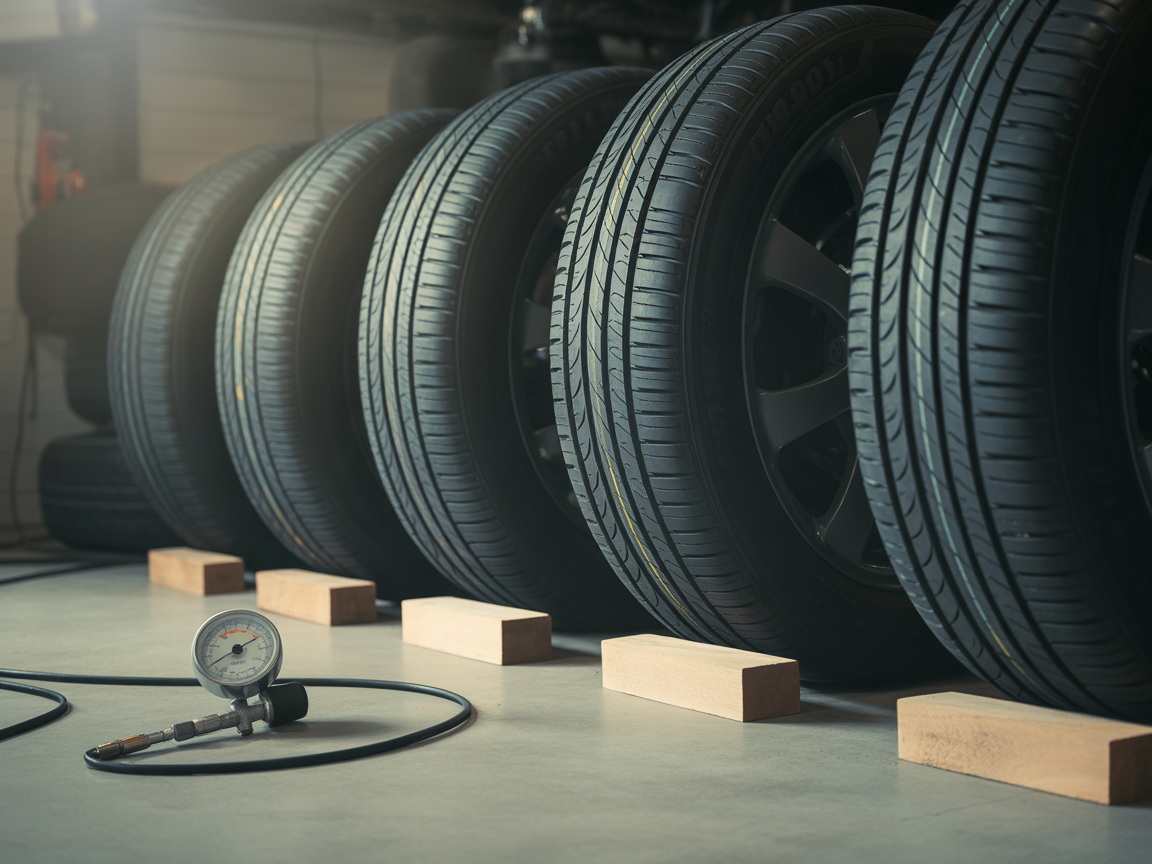
Inflate all tires to the maximum pressure listed on the tire sidewall (not the door placard pressure). This is typically 40-50 PSI for passenger vehicles. Higher pressure reduces the contact patch size, minimizing flat spot formation. Plan to check and adjust pressure monthly during storage.
Weight Relief Options
For storage exceeding 3 months, consider these options to eliminate tire flat spotting entirely:
- Jack stands: Position under frame rails to lift all four tires off the ground; place plywood under stands on soft surfaces
- Tire cradles: Specialty products that distribute weight across more tire surface area
- Flat-free tire storage bags: Maintain inflation pressure more consistently
Never use the parking brake during long-term storage. Brake pads can bond to rotors, and cables can seize in the applied position. Instead, use wheel chocks or leave manual transmission vehicles in gear (first gear on flat surfaces, reverse on inclines).
Step 4: Battery Maintenance and Protection
Battery failure is the most common issue with stored vehicles. Conventional lead-acid batteries self-discharge at 1-3% per month even when disconnected. Modern vehicles with always-on electronics drain batteries faster, sometimes completely depleting them within 2-4 weeks.
Disconnection Method
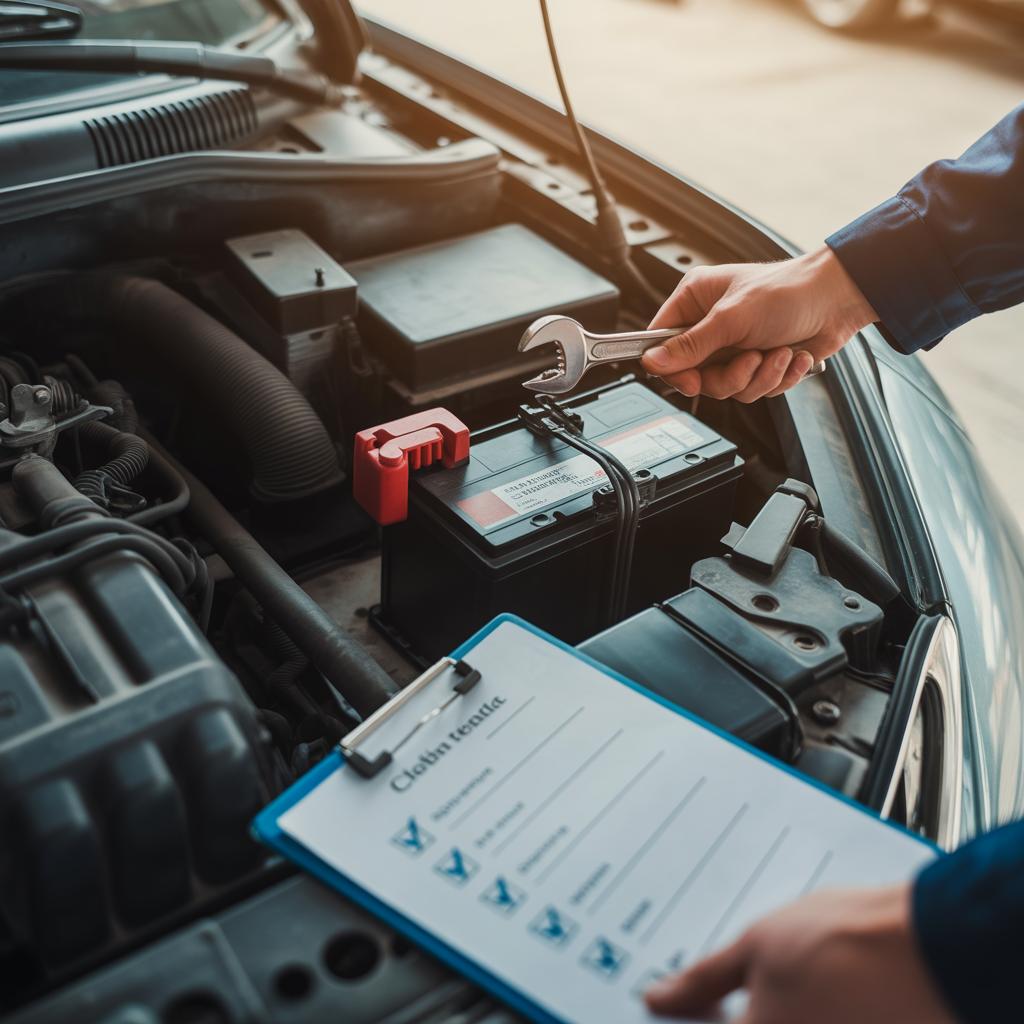
Disconnect the negative (black) battery terminal first, then the positive (red) terminal. This sequence prevents accidental shorts if your wrench contacts the frame. Clean both terminals with a wire brush and apply dielectric grease or terminal protector spray to prevent corrosion.
Battery Maintainer Option
A quality battery maintainer (also called a trickle charger or float charger) keeps batteries at optimal charge without overcharging. Look for models with:
- Automatic shut-off when fully charged
- Float mode that maintains charge without boiling electrolyte
- Desulfation mode for older batteries
- LED indicators showing charge status
Expect to pay $30-$80 for a quality maintainer from brands like Battery Tender, NOCO, or CTEK. This investment pays for itself by extending battery life 2-3 years.
Electric Vehicle Battery Storage
EVs require different battery management. Lithium batteries degrade faster when stored at 100% or near 0% charge. Tesla recommends storing at 50% charge; most manufacturers suggest 50-80%. Check your owner's manual for specific guidance.
If possible, store EVs in climate-controlled environments where temperatures remain between 50-70 degrees Fahrenheit. Extreme heat accelerates lithium battery degradation more than cold temperatures.
Step 5: Pest Prevention and Security
Rodents cause an estimated $50 million in vehicle damage annually in the United States. Mice and rats seek warm, enclosed spaces and can squeeze through openings as small as 1/4 inch. Once inside, they build nests from insulation and chew wiring, hoses, and upholstery.
Physical Barriers
Block all potential entry points:
- Stuff steel wool into exhaust pipe openings (remove before starting)
- Cover air intake with fine mesh screen
- Seal gaps around hood and trunk with weatherstripping
- Place mothballs or cedar blocks in engine bay (in mesh bags for easy removal)
Deterrent Methods
Natural deterrents include peppermint oil (spray on cotton balls placed around the vehicle), dryer sheets in the cabin and engine bay, and cayenne pepper sprinkled around parking area perimeter. Commercial rodent deterrent sprays containing capsaicin provide 30-60 days of protection per application.
Place snap traps or electronic traps around the vehicle perimeter in rodent-prone areas. Check traps weekly during storage. Estes Park's mountain environment means rodent activity increases significantly from October through April.
Security Considerations
Document your vehicle's condition with dated photographs before storage. Remove all valuables, registration documents, and garage door openers. Consider a steering wheel lock or kill switch for added theft deterrence in non-secured locations.
For vehicles stored at professional facilities, verify security features including gated access, surveillance cameras, and adequate lighting. Month-to-month rental agreements provide flexibility if your storage needs change.
Step 6: Covering and Environmental Protection
The right cover protects paint from UV damage, dust accumulation, and moisture while allowing air circulation to prevent mold growth. Indoor storage with a breathable cover is ideal; outdoor storage requires weather-resistant materials with proper ventilation.
Indoor Storage Covers
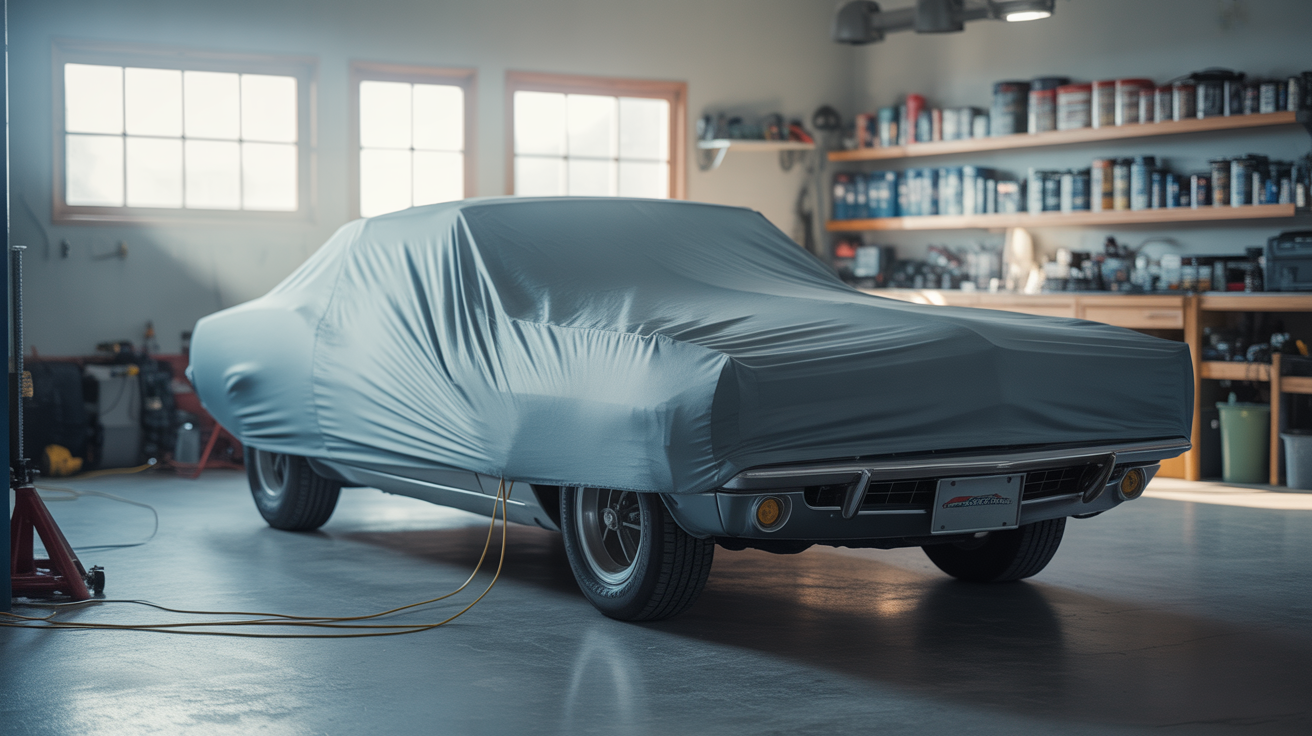
Choose breathable cotton or flannel-lined covers for indoor storage. These materials prevent moisture trapping while protecting against dust and minor impacts. Expect to pay $100-$300 for a quality fitted cover. Avoid plastic tarps that trap moisture and promote mold growth.
Outdoor Storage Covers
Outdoor covers need water-resistant outer layers with breathable inner linings. Look for:
- Multiple layer construction (3-5 layers minimum)
- UV-resistant outer fabric
- Soft inner lining to prevent paint scratches
- Elastic hem and tie-down grommets for secure fit
- Mirror pockets and antenna accommodation
Quality outdoor covers cost $150-$500 depending on size and materials. Budget covers under $100 typically lack adequate UV protection and breathability.
Storage Location Selection
The ideal storage location is a climate-controlled garage maintaining 50-70 degrees Fahrenheit with 30-50% relative humidity. When garage storage is not available, dedicated vehicle storage spaces offer secure alternatives with convenient access for periodic maintenance checks.
Park on a level, paved surface whenever possible. Gravel or dirt surfaces retain moisture and promote undercarriage corrosion. Place a vapor barrier (heavy plastic sheeting) under the vehicle if parking on concrete that sweats moisture.
Monthly Maintenance During Storage
Even properly prepared vehicles benefit from monthly attention. Plan 30-60 minutes each month for these maintenance tasks that prevent small issues from becoming expensive repairs.
Monthly Checklist
- Check tire pressure and inflate as needed
- Verify battery charge level (12.4V minimum for lead-acid)
- Inspect for signs of rodent activity or pest damage
- Look under vehicle for fluid leaks
- Check cover for tears, moisture accumulation, or displacement
Should You Start the Engine Monthly?
Expert opinions vary on this practice. Starting the engine monthly and running for 20-30 minutes circulates fluids and prevents seal dry-out. However, short runs that do not reach full operating temperature (at least 15-20 minutes) can actually cause more harm by introducing moisture into the oil and exhaust system without burning it off.
If you choose to run the engine monthly, drive the vehicle at least 10-15 miles to reach full operating temperature and exercise the brakes, transmission, and steering components. Simply idling in place provides minimal benefit.
Preparing Your Vehicle for Return to Service
After extended storage, a systematic recommissioning process ensures safe operation. Do not simply start the engine and drive away; take 30-45 minutes to verify all systems function properly.
Pre-Start Inspection
- Remove all pest deterrents (exhaust plugs, intake covers, mothballs)
- Reconnect battery (positive terminal first, then negative)
- Check all fluid levels
- Inspect tires for flat spots, cracking, or low pressure
- Look under hood for rodent nests or chewed wires
- Remove car cover and inspect paint condition
Initial Operation
Allow the engine to idle for 2-3 minutes before driving. Listen for unusual noises indicating belt, bearing, or exhaust issues. Check all lights, turn signals, and brake lights. Test brakes gently before leaving the storage area; rotors may have surface rust requiring a few stops to clean.
Drive conservatively for the first 10-15 miles while monitoring gauges and listening for unusual sounds. Flat-spotted tires may vibrate initially but often round out after 50-100 miles of driving. Persistent vibration indicates permanent flat spotting requiring tire replacement.
Frequently Asked Questions
How do you prepare a vehicle for long-term storage?
Prepare a vehicle for long-term storage by completing six steps: clean interior and exterior thoroughly, change oil and add fuel stabilizer, inflate tires to maximum sidewall pressure, disconnect or maintain the battery, implement pest prevention measures, and cover with breathable material. The entire process takes 2-4 hours and prevents the most common storage-related damage.
What is the 30-60-90 rule for cars?
The 30-60-90 rule refers to scheduled maintenance intervals measured in thousands of miles. At 30,000 miles, replace air filters and inspect brakes. At 60,000 miles, replace transmission fluid, coolant, and spark plugs. At 90,000 miles, replace timing belt (if equipped), water pump, and major fluids. This rule is unrelated to storage but ensures vehicles remain in optimal condition for either daily use or long-term storage.
How to keep a car parked for a long time?
Keep a parked car in good condition by addressing the four main failure points: batteries (use a maintainer or disconnect), tires (over-inflate or use jack stands), fuel (add stabilizer and fill tank), and pests (block entry points and use deterrents). Monthly inspections catch developing issues before they cause expensive damage. Indoor storage in climate-controlled environments provides the best protection.
How often should I check on a stored car?
Check on a stored car at least once monthly. Verify tire pressure, battery charge, and inspect for pest activity or fluid leaks. If using a battery maintainer, confirm it is functioning properly. Monthly checks take 15-30 minutes and catch problems early when they are inexpensive to fix.
Can I store a car outside for winter?
You can store a car outside for winter with proper preparation, though indoor storage is preferable. Use a high-quality weatherproof cover, park on a paved surface with a vapor barrier, and increase pest prevention measures since rodents seek warm shelter in cold months. In Estes Park's mountain climate, temperatures regularly drop below 0 degrees Fahrenheit, making battery maintenance and antifreeze concentration (should test to at least -34 degrees Fahrenheit) especially critical.
Does long-term storage affect car insurance rates?
Long-term storage can reduce insurance costs by 10-50% depending on your provider and coverage adjustments. Contact your insurer to switch to comprehensive-only coverage (dropping collision and liability) while the vehicle is not being driven. Maintain comprehensive coverage to protect against theft, vandalism, fire, and weather damage during storage. Some insurers offer specific "storage" or "laid-up" policies at reduced rates.
Storage Duration Planning Guide
Different storage durations require different preparation levels. Use this guide to determine which steps are essential for your situation:
| Duration | Essential Steps | Recommended Steps |
|---|---|---|
| 1-3 Months | Clean, fuel stabilizer, tire inflation, battery disconnect | Cover, pest deterrents |
| 3-6 Months | All above plus oil change, battery maintainer | Jack stands, monthly checks |
| 6-12 Months | All above plus jack stands, comprehensive pest barriers | Cylinder fogging, fresh coolant |
| 12+ Months | All above plus drain fuel system, cylinder fogging | Climate-controlled storage, quarterly professional inspection |
For vehicles stored in Estes Park's mountain environment, factor in elevation effects (7,500+ feet) on tire pressure readings and the increased rodent activity during harsh winters. The storage size guide can help determine appropriate space requirements for your vehicle type.
|